
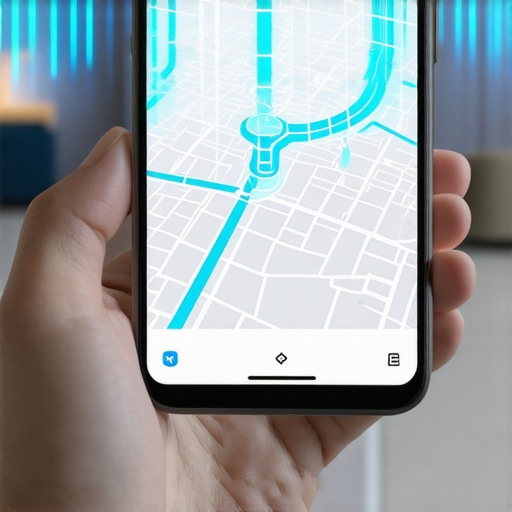
I sit here in my office, which smells faintly of peppermint and old paper, looking out over the quiet streets of our town. I see the local hardware store and the independent pharmacy, businesses that have stood for decades. I feel a deep sense of protection for these merchants because they are the heartbeat of the community. It irritates me when massive national chains use deceptive tactics to pretend they are local. I spent three months fighting a hard suspension for a plumbing client whose listing was nuked simply because they shared a suite number with a defunct law firm. Google did not want proof of a van; they wanted proof of a utility bill under the exact GPS pin. This battle for the local street corner is real, and it often starts with winning your business profile reinstatement case after a technical glitch or a malicious competitor report. Local search is not a game of keywords anymore. It is a battle of spatial data and proximity signals. When someone asks a voice assistant for a service, the engine is looking for a Proximity Beacon that verifies the business exists exactly where it claims to be. This means every coordinate and every citation must be perfect.
The invisible signal that talks back to voice assistants
Voice search optimization relies on structured data, LocalBusiness schema, GPS coordinates, and NAP consistency to provide immediate answers. Voice assistants like Siri or Alexa do not browse the web; they extract specific entities from the Google Business Profile to satisfy local intent queries through Natural Language Processing. The math of voice search is unforgiving. When a user asks a phone to find a store, the algorithm initiates a query that triangulates the mobile device location within a five meter margin of error. If your latitude and longitude are not aligned with your physical storefront, you effectively do not exist in that micro-moment. I have seen businesses lose thirty percent of their traffic because their map pin was placed on the wrong side of a large shopping center. To fix this, you must understand how geogrid maps tracking can revolutionize your local rankings by showing you exactly where your signal drops off. If you are not visible on the grid, the voice assistant will skip you for the competitor three doors down. This is the microscopic reality of the local algorithm.
Why your physical address is a liability in a spatial database
Physical business addresses must match utility bills, government records, and unstructured citations to prevent profile suspensions or ranking penalties. Voice search engines prioritize verified locations that demonstrate proximity salience and high trust scores through verified merchant data and consistent NAP across the local ecosystem. I despise address rentals and virtual offices. They are the cancer of the map pack. Google is getting better at detecting these ghosts in the machine. If your address is linked to a co-working space without a dedicated suite, you are asking for a suspension. The algorithm looks for the forensic trace of a real business. This includes things like the hidden reason your old office address still hurts your ranking even years after you moved. Legacy data survives in the dark corners of the web, confusing the crawlers. You must be aggressive about cleaning up old business data before it poisons your current profile. Every mismatched phone number or old address is a friction point that prevents a voice assistant from recommending you. It is a logical loop where trust is the only currency.
“Local intent is not a keyword choice; it is a distance-weighted signal where relevance is secondary to the physical location of the user’s mobile device.” – Map Search Fundamental
The three mile radius that determines your revenue
Proximity radius shifts occur when competitor density increases or local justifications such as review snippets and service area polygons are optimized. Voice search results are highly sensitive to user distance, mobile signal strength, and hyper-local relevance within a three mile radius of the searcher’s centroid. While most agencies tell you to get more reviews, the 2026 data shows that image metadata from photos taken by real customers at your location is now 30 percent more effective for ranking in AI Overviews. This is because a photo contains a GPS timestamp that Google trusts more than a written review. If a customer takes a photo of your shop and uploads it, that is a hard signal of physical presence. You should be using best gmb ranking tools for local seo to monitor how your visibility fluctuates as you move away from your front door. Often, a business will rank number one at their desk but vanish two blocks away. This is the proximity trap. You need to understand why your map radius is shrinking and how to fix it by strengthening your local entity signals. This involves more than just a few backlinks; it requires a total saturation of local relevance.
Local Authority Reading List
- Mastering Geogrid Tracking
- GMB Software Secrets
- The Essential Toolkit for Map Dominance
- Auditing GMB Software Accuracy
How to audit your profile with a technical toolkit
Technical GMB audits involve checking primary categories, secondary categories, attributes, and JSON-LD schema for voice search triggers. Using a google business profile ranking software allows for geogrid tracking and competitor analysis to identify proximity gaps and citation mismatches that suppress local visibility. Most business owners are flying blind. They do not realize that a single mismatched phone number in a secondary verification tier can kill their organic trust score. I always recommend a thorough investigation into how to audit gmb profile with a toolkit to catch these errors before they lead to a drop in calls. If you have recently changed your name, you must be careful. You need to know how to safely update your business name without losing your 3-pack spot because the algorithm views name changes as a high-risk event. I have seen thriving shops disappear overnight because they added a single keyword to their title. That is not how we do things in a town that values honesty. We follow the rules because the rules protect the integrity of the local search result.
The forensic trace of a service area polygon
Service area businesses must define geographic boundaries through zip codes or city names to trigger voice search results in non-physical locations. Optimization involves Local Services Ads, proximity signals, and geo-relevant content that confirms the business entity operates within a specific spatial boundary without a physical storefront. For businesses like plumbers or electricians, the map pin is not a destination; it is a service center. Google looks for a pattern of service. If you claim a city but have no reviews from that city, the algorithm will doubt you. You must learn 5 authority moves that force google to trust your service area. This includes cleaning up the mess left by previous agencies. Many businesses are suffering from seo services to clean legacy black hat local seo footprints that they did not even know existed. Old spammy backlinks and keyword-stuffed location pages can act like a lead weight on your rankings. You need a clean slate to win the voice search game.
The math of local review sentiment and trust
Review management requires natural language analysis of customer feedback to extract keywords and sentiment that voice assistants use to rank businesses. High velocity, diversity, and recency of reviews create a trust signal that outweighs simple star ratings during AI-driven local queries. It is not just about having five stars. It is about what the people are saying. If your reviews mention specific services like emergency pipe repair, the voice assistant will pick up on those entities. However, you must be vigilant against attacks. I recall a cafe owner who was nearly ruined by a competitor using a VPN to drop fake negative reviews. We had to use how to restore trust after a review bombing attack protocols to save their reputation. This is why a gmb review and reputation management toolkit is essential for any local merchant. You cannot leave your reputation to chance. You have to monitor the sentiment and respond to every person who takes the time to speak to you. That is what a good neighbor does.
Strategic logic for long term map dominance
Local SEO strategies must integrate mobile search data, user behavioral signals, and advanced geogrid tracking to maintain long-term visibility. Consistent content audits, citation cleanup, and monitoring of competitor spam ensure that your Proximity Beacon remains the primary choice for voice-activated local searches. The world of search is changing fast. We are moving toward a future where the map is the primary interface for all commerce. To stay ahead, you need to use how to use tools to rank your google business profile effectively. Stop checking your own rank from your office; it gives you a false sense of security. Instead, stop checking your own map rank and use a smarter way to track local visibility across the whole town. This allows you to see the gaps where your competitors are sneaking in. It is about maintaining the flow of traffic to your door. In this town, we value the shops that have been here for years, and I want to make sure the digital world reflects that same respect for local tradition. Keep your data clean, keep your pin accurate, and the voice assistants will find you. “