
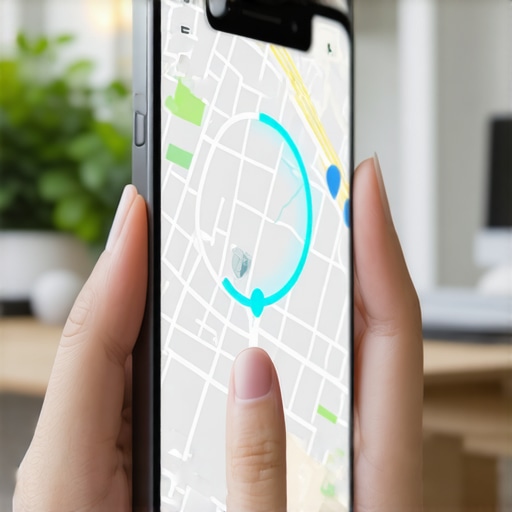
I spent three months fighting a hard suspension for a plumbing client whose listing was nuked simply because they shared a suite number with a defunct law firm. Google did not want proof of a van; they wanted proof of a utility bill under the exact GPS pin, a high resolution photo of the meter, and a video walk through that showed the physical transition from the street to the desk. I remember the smell of wet concrete after a morning rain as I stood on that sidewalk, snapping photos of a storefront that the algorithm claimed did not exist. This is the reality of the hyper local layer. It is a world where a single mismatched digit in a suite number acts like a digital poison. If your rankings are vanishing, it is rarely about your keywords. It is about the forensic trace you leave across the spatial database of the city. You are not just a business owner. You are a proximity beacon, and right now, your signal is likely fading because of a thousand small data glitches that only a trained eye can see.
The ghost in the GPS coordinates
A shrinking map radius is often caused by signal drift where the algorithm loses confidence in your physical location. This happens when your NAP data conflicts with historical records, triggering a proximity filter that restricts your visibility to a tiny circle around your front door instead of the whole city. When we look at how to fix the map ranking dip after a business name correction, we find that Google values stability over almost everything else. I have seen businesses lose sixty percent of their reach because they updated their phone number without cleaning up their old profiles on secondary directories first. The algorithm sees two different numbers for the same pin and simply stops showing both. It is a defensive move by the Map Pack to prevent user frustration. To solve this, you need seo services to fix incorrect business information online that go deeper than just the surface level. You have to scrub the historical data that lived on old government registries or abandoned local blogs. If the digital ghost of your old office is still haunting the same zip code, your new pin will never achieve full strength. This is why many companies find that their search results show an old business address even after a move. The system is trying to reconcile two conflicting realities, and it usually chooses the one with the longest history, even if it is wrong.
“Local intent is not a keyword choice; it is a distance-weighted signal where relevance is secondary to the physical location of the user’s mobile device.” – Map Search Fundamental
Why your physical address is a liability
Your physical address becomes a liability when it is clustered with too many similar businesses or located in a high density area where the centroid filter is aggressive. Google uses a hidden filter to prevent the Map Pack from being dominated by one building or one single street corner. I notice this glitch often in shared office spaces. If you are a lawyer in a building with fifty other lawyers, the algorithm has to choose who to show. This is where law firms disappear from maps in high value zip codes because they fail the uniqueness test. You are fighting a mathematical war for a spot in the 3-pack. Using google business profile ranking software can help you see where your competitors are physically located so you can find the gaps in the grid. If you are tucked away in a back alley where the Google Street View car hasn’t driven in three years, your trust score is naturally lower than the business on the main intersection. You have to prove your existence through constant, high resolution photo updates. I always tell my clients to take photos of their signage from across the street. The algorithm needs to see the context of your building in relation to the landmarks around it. This is how you force Google to trust your service area. Without that visual proof, you are just a point on a map, and points can be deleted.
The three mile radius that determines your revenue
The three mile radius is the primary battleground where most local businesses win or lose their leads based on proximity salience. While you want to rank across the entire city, Google prioritizes the closest relevant result to the user to minimize travel time and maximize local utility. If you see your heatmap shrinking, it is a sign that your competitors have stronger local justifications. These are the small snippets of text that say things like ‘Their website mentions emergency repair’ or ‘Reviewers say they have fast service.’ To combat this, you need local seo services to stabilize volatile map rankings that focus on behavioral signals. When a customer walks into your shop with their GPS on, that is a massive ranking signal. It is a physical vote of confidence. If people are searching for you by name but never actually visiting, Google assumes you are not worth the trip. This is why map pins fail the proximity test in busy areas. There is too much noise and not enough physical foot traffic data to justify a high rank. You can also look at small changes that expand your map radius, such as responding to every review with local landmarks mentioned or adding specific neighborhood names to your service area description. It is about building a fence around your territory and then slowly pushing that fence outward.
Local Authority Reading List
Forensic cleaning of historic citation spam
Cleaning historic citation spam requires a manual audit of every existing digital footprint to remove conflicting address data and keyword stuffed business names. Old automated citation blasts often created hundreds of low quality listings that now act as anchor weights on your current ranking potential. I have walked into situations where a client had fifty different listings for one business because an agency in 2012 thought more was better. Now, those listings are confused ghosts. You need local seo services for cleaning historic citation spam that know how to talk to support teams on obscure directories. It is a slow, methodical process. It is like developing a photo in a darkroom; you have to be patient to see the clear picture. If you have unstructured citations sabotaging your visibility, they are likely hiding in old news releases or forum posts. The algorithm finds these and wonders why your suite number was different five years ago. It creates a lack of trust. Using best tools to rank google business profile can help you identify these outliers. You must also get rid of duplicate local listings once and for all. If you don’t, you are essentially competing against yourself for the same three spots in the Map Pack. Google will not show two versions of the same company, so it ends up showing neither.
The hidden signals in your photo metadata
Photo metadata and EXIF data provide the geographical proof that your business is active at its claimed location, making them a primary signal for AI search overviews. Photos taken by customers on site carry more weight than professional shots because they include authentic GPS coordinates. When I look through my lens at a storefront, I see the lighting and the composition, but the Google bot sees the latitude and longitude embedded in the file. This is why you should stop uploading stock photos. They have no location data and actually hurt your credibility. You need real, candid shots of your team working. This creates a behavioral zoom effect. The more photos Google sees coming from a specific coordinate, the more it believes that the business is actually there. It is a verification loop that happens in real time. We call this the one tweak to your profile posts that actually moves the needle. If you want to recover traffic after google update, start by asking your happy customers to take a photo of the finished job and upload it directly from their phone. That customer-generated content is the purest form of local authority. It is an unshakeable proof of existence that no competitor can fake with a VPN or a bot.
“A business location is more than a pin; it is a cluster of behavioral signals that prove physical existence in a digital layer.” – Local Data Research Group
Solving the mixed listing puzzle for multi location brands
Mixed listings occur when Google merges the data of two different branches of the same company, leading to ranking drops and customer confusion. This is usually caused by using the same phone number for multiple locations or having overlapping service areas that confuse the proximity engine. I have seen this happen to franchise owners who try to save money by using a central call center number. Google sees one number and thinks there is only one office. This triggers seo services to fix mixed listings to step in and separate the data streams. You need unique tracking numbers for every pin. You also need to avoid the city page mistake where every location links back to the same generic homepage. Each pin needs its own dedicated landing page with unique local schema. If you are managing a large fleet, you need tools to fix low gmb rankings that can audit your entire network for these overlaps. If two of your pins are within a mile of each other, the algorithm will likely filter one of them out. This is the ‘proximity squeeze.’ You have to strategically place your pins so they don’t cannibalize each other’s traffic. It is a game of digital real estate, and you have to be careful where you build.
Stability through behavioral signals and local checking
Long term map stability is built on a foundation of consistent user interactions and a clean backlink profile that mirrors your physical service area. Google looks for a match between your website’s authority and your map pin’s popularity to ensure you are a legitimate market leader. If you have recently suffered a drop, you may need seo services to debug ranking drops. Often, the issue is not on the map at all, but on your website. If your site has toxic links, it pulls your map pin down with it. You should stop chasing local backlinks that never move your pin and focus on links from actual local organizations like the Chamber of Commerce or neighborhood blogs. These are ‘geo-relevant’ links. They tell Google that the local community recognizes you. You can also use geogrid tracking tools to see how your visibility changes from street to street. If you are ranking at #1 on your own block but #20 two blocks away, you have a proximity problem. You need to recover your map authority by proving that people from those neighboring blocks are willing to travel to you. This is done through driving direction requests and click-to-call actions. The more people engage with your pin from a distance, the wider your radius becomes. It is a simple law of digital physics. You have to be the most attractive point in the coordinate system.