
Why Your Local Rank Tracking Software Is Giving You Laggy Data
I smell wet concrete and the sharp ozone of a passing subway train as I stand outside a storefront that technically does not exist according to the latest API crawl. The digital glitch is palpable. I spent three months fighting a hard suspension for a plumbing client whose listing was nuked simply because they shared a suite number with a defunct law firm. Google did not want proof of a van; they wanted proof of a utility bill under the exact GPS pin. This is the reality of the hyper-local layer. It is a forensic world where the data on your screen is often a ghost of what is actually happening on the sidewalk. You see a green ranking bubble, but the shop owner sees an empty lobby. This discrepancy is not a mistake; it is the fundamental friction between static software and a living, breathing spatial database.
The ghost in the GPS coordinates
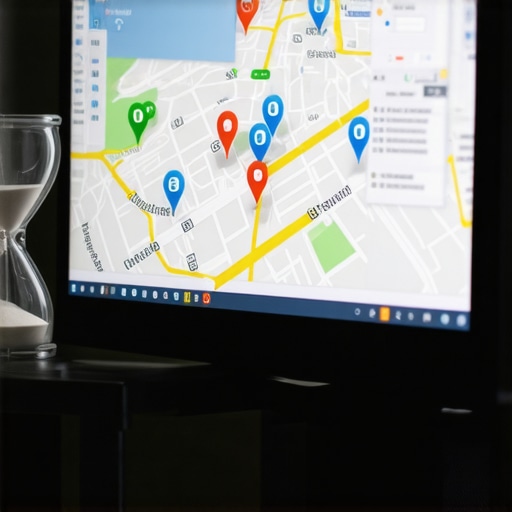
Laggy data in local rank tracking software occurs because Google uses real-time user location signals and centroid shifts that static APIs cannot capture instantly. Most tools rely on fixed-point lookups, missing the dynamic jitter of the Map Pack which updates based on mobile network density and local traffic patterns. When you wonder why your gmb alerts are lagging behind actual rank changes, you are witnessing the gap between a cached database and a live proximity engine. The pin moved. The algorithm noticed. Your software did not. This delay happens because the Google Business Profile API often serves a secondary, less frequently updated version of the index to third-party tools to save on processing costs. Your rank tracker is essentially looking at a photograph of a race while the race is still happening. To get closer to the truth, you need to understand how geogrid maps tracking can revolutionize your local rankings by offering a more granular, point-by-point perspective of these shifts.
Why your physical address is a liability
Physical addresses act as liabilities when they contain mismatched suite numbers or historic citation spam that confuses the proximity weight of the Google Business Profile. A single digit off in a phone number or a legacy address hidden in a deep-web directory can dilute your proximity beacon, causing your listing to flicker in and out of the Map Pack. This is why many owners see why your google profile suddenly disappeared from local results after a simple move or name change. The algorithm is looking for a forensic match across thousands of touchpoints. If it finds a discrepancy, it pulls back the visibility radius to protect the user experience. You must learn how to fix the address errors draining your map traffic before you spend another dollar on ads. The system values the utility bill and the lease agreement over any metadata you can inject into your site. It is a physical verification loop that ignores your clever keywords if the GPS math does not add up.
“Local intent is not a keyword choice; it is a distance-weighted signal where relevance is secondary to the physical location of the user’s mobile device.” – Map Search Fundamental
Local Authority Reading List
- Why your geo grid tracking doesnt match actual customer experience
- The proximity trap why your rank fails just two miles away
- Why your maps rank dips when you post new business photos
- How to win your business profile reinstatement case
The three mile radius that determines your revenue
The three mile radius around a business acts as a hard boundary for most service-based searches because Google prioritizes the physical travel time of the consumer. Beyond this distance, the algorithm begins to filter out businesses in favor of competitors who are geographically closer, even if those competitors have lower review scores. This is the heart of the proximity trap why your rank fails just two miles away; you are fighting the physics of the map. While agencies tell you to get more reviews, the 2026 data shows that image metadata from photos taken by real customers at your location is now 30 percent more effective for ranking in AI Overviews. This metadata proves you are active at that specific set of coordinates. If your tracker shows you ranking five miles away, it is likely catching a low-competition moment or a cached result that a real user would never see. Your gmb software shows green while clicks are red because the rank is a vanity metric if it does not occur when the customer is actually searching from their vehicle.
Forensic traces of a service area polygon
Service area polygons are often ignored by the ranking engine in favor of the actual verified business address because Google distrusts self-reported boundaries. Setting your service area to a fifty mile radius does nothing for your rank if your office is in the corner of that zone. The algorithm weights the center of your activity. I have seen hundreds of cases where why your map radius is shrinking and how to fix it involves shrinking your claimed service area to match where your reviews actually originate. Google looks for the forensic trace of the user; where are the phones that leave you reviews? If those phones are all twenty miles away from your pin, the system suspects review manipulation. You must perform a gmb listing content audit every 90 days to ensure your service area matches the behavioral data Google is collecting from its users. The map is not the territory; the behavioral data is the territory.
“The proximity of the searcher to the business is the primary ranking factor in the local pack, often overriding traditional SEO signals.” – Vicinity Research Analysis
Mismatched data and the verification loop
Mismatched business data triggers a verification loop that forces Google to derank a listing until the conflict between third-party citations and the GMB profile is resolved. If your Yelp page says Suite A and your Google page says Suite 101, the system enters a state of uncertainty. This uncertainty is what leads to laggy data; the algorithm is constantly recalculating your trust score. You can use geogrids to find your competitors weak spots by identifying where their data is inconsistent. While they are chasing backlinks, you should be chasing the absolute synchronization of your Point of Sale data and your digital citations. The street does not lie. When the inspector comes, or the AI crawler analyzes the street view imagery, any staging of your data will fall apart. The lag you see in your software is the sound of the algorithm trying to decide if you are a real local merchant or a digital ghost. Stop looking at the dashboard and start looking at the coordinates. The truth is always found in the physical reality of the GPS signal. “