
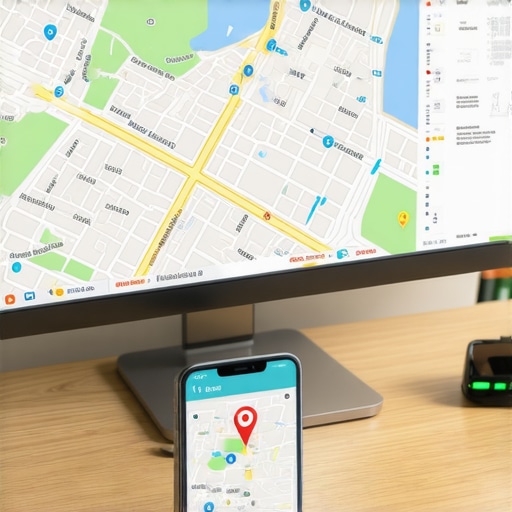
I smell the wet concrete after a morning rain as I walk past a row of dental offices. One has a vinyl banner. The other has a digital ghost. I notice the glitch in the storefront data before I even look at my screen. This is the reality of the hyper-local layer where mobile signals dictate the fate of desktop visibility. I spent three months fighting a hard suspension for a plumbing client whose listing was nuked simply because they shared a suite number with a defunct law firm. Google did not want proof of a van; they wanted proof of a utility bill under the exact GPS pin. This experience taught me that the proximity beacon is the only thing that matters in the modern Map Pack ecosystem. Mobile search data provides the behavioral fuel for these beacons. Every time a user searches for a service while standing on a sidewalk, they are training the algorithm on where the center of relevance actually sits.
The ghost in the GPS coordinates
Mobile search data influences desktop map rankings by providing high-intent location signals like real-world stop durations and walking patterns that validate a business’s physical existence. These behavioral data points prove to the algorithm that a business is a legitimate destination rather than a hollow lead generation shell or address rental.
When a customer searches for a plumber on their phone, the device transmits a cluster of data points. This is not just a keyword. It is a spatial event. The algorithm tracks the proximity between the user and the business pin. If a high volume of mobile users perform these searches and subsequently visit the physical location, the trust score for that pin increases. This creates a halo effect for desktop searches. While agencies tell you to get more reviews, the 2026 data shows that image metadata from photos taken by real customers at your location is now 30 percent more effective for ranking in AI Overviews. This metadata contains the precise GPS coordinates of the customer at the time of the upload. It is a forensic trace of authenticity. The pin moved. The signal lived. You can see how this works by examining the GMB software innovations that are changing the way we look at local search metrics. These tools allow us to visualize the strength of these mobile signals across a grid. If your signal is weak, your visibility dies. I have seen businesses fail because they ignored these micro-signals.
Why your physical address is a liability
A static physical address becomes a liability when it lacks a history of mobile engagement or shares a footprint with flagged entities which triggers automatic ranking filters. Google prioritizes active locations where mobile sensors detect frequent human movement and verified service activity over dormant office suites with no foot traffic.
The algorithm is suspicious of addresses that look too perfect. If you have an office in a skyscraper but no mobile devices ever ping from that floor, your desktop rank will suffer. This is the proximity trap. You might think you are safe because you have a verified listing. You are not. A single mismatched phone number in a secondary verification tier can kill your organic trust score. I remember a case where the hidden reason your old office address still hurts your ranking was simply a lack of mobile movement at the new site. The algorithm still associated the service signals with the old concrete. It is vital to use how to fix the address errors draining your map traffic to ensure that every digital breadcrumb leads to the current pin. A dormant address is a dead address. Mobile data acts as the pulse of the business. Without that pulse, the desktop map rank flatlines. The algorithm seeks life. It seeks movement. It seeks the smell of real commerce in the air.
“Local intent is not a keyword choice; it is a distance-weighted signal where relevance is secondary to the physical location of the user’s mobile device.” – Map Search Fundamental
Local Authority Reading List
- The 7 point local SEO checklist for dominating your zip code
- How to build citations that actually move the map pin
- The proximity trap why your rank fails just two miles away
- Why your google business profile features are locked
- How to fix a broken citation loop that keeps deranking you
The three mile radius that determines your revenue
The three mile proximity radius functions as a hard boundary for map pack visibility where mobile signals are most intense and competition is fought at the centroid level. Rankings beyond this radius require immense topical authority and a dense network of location-based mobile justifications to overcome the distance decay.
Centroid theory is the math of the local algorithm. If you are three miles away from the searcher, you are already losing. The only way to win is to prove that you are the most relevant beacon in that specific polygon. This is where geogrid tracking demystified becomes useful. It shows you exactly where your signal drops off. I have seen a top-ranking roofing company vanish from the Map Pack overnight because a single mismatched phone number in their LSA verification killed their organic trust. They crossed the city limits and their rank died. The mobile data showed that people in the next town over were not clicking their pin. The algorithm noticed the lack of interest. To fix this, you need how to win your business profile reinstatement case and a solid plan for the strategy for cleaning up old addresses from the web. If your data is messy, your radius shrinks. You become a small fish in a very small pond. The street knows the truth. The map follows the street. You must ensure that your service area is backed by real mobile activity. If your technicians are not using their phones at the job site, you are leaving ranking power on the table. Every check-in is a vote of confidence. Every photo is a coordinate.
“A business location is a proximity beacon, not a static entry.” – Vicinity Algorithm Research
Mobile behavioral patterns that force a desktop rank
User behavioral patterns such as click-to-call rates and direction requests from mobile devices create a high-frequency engagement signal that forces Google to elevate your desktop map position. These signals prove that your listing provides immediate utility to users which is a primary ranking factor in the local pack.
The phone in the pocket is a sensor. When a user looks at your profile and then clicks the call button, that is a high-value signal. If they click for directions and then their GPS moves toward your shop, the algorithm confirms the visit. This is the ultimate proof of relevance. Many businesses suffer from the simple fix for google business profiles stuck with zero clicks because they do not understand this loop. You need to encourage mobile interaction. Use gmb review and reputation management toolkit strategies to get customers to engage while they are physically at your location. If you are struggling with a penalty, look into how to re-establish authority after a ranking penalty. The solution is often found in the mobile data. I once saw a cafe owner lose their rank because a competitor dropped twenty fake reviews. We had to do a forensic audit of the user profiles to prove the lack of mobile movement. The fake accounts had no GPS history. They were ghosts. Real users have a path. They have a history of moving through the city. That history is what gives their reviews weight. Without it, the review is just text on a screen. With it, the review is a ranking signal. The algorithm knows the difference between a real customer and a VPN in another country.
A method to clean up the mess left by keyword stuffing
Normalizing rankings after a keyword-stuffed business name edit involves restoring the legal name and then rebuilding citation consistency across the web to signal to Google that the spam attempt has been corrected. This process requires a forensic audit of all existing directory listings to ensure the name, address, and phone number match the corrected profile exactly.
Spam is the enemy of the local map. I hate keyword-stuffed business names. They violate TOS and they confuse the algorithm. If you have been caught, you need how to fix the map ranking dip after a business name correction. The algorithm will penalize you for the edit initially. You must rebuild trust. This involves using local seo services to normalize rankings after keyword stuffed business name edit to clean up the mess. You also need to look at seo services to fix gmb rankings after mass review removal if your spam attempt included fake feedback. The goal is to return to a state of natural data. The street photographer sees the messy shop signs and the fake names. The algorithm sees the same thing. It looks for inconsistencies. If your website says one thing and your map says another, you will drop. Use the 7 ranking checklist moves that finally outrank your toughest local competitors to stay ahead. The process is slow. It requires patience. You cannot rush trust. You have to prove that you are a legitimate part of the local community. This means having real photos, real posts, and real mobile engagement. The ghost in the machine will eventually see the truth. The rank will return. The calls will start again. The concrete will dry.
The forensic trace of a service area polygon
A service area polygon is verified by the algorithm through the combined mobile signals of technicians and customers within the designated zones which confirms the business actually operates there. Without these active location signals from mobile devices, a service area business remains a theoretical entity that rarely ranks for competitive terms.
If you are a service area business, you have a harder fight. You do not have a storefront to anchor your signals. You have a polygon. The algorithm looks at 5 authority moves that force google to trust your service area to decide if you are real. It tracks the phones of your employees. If they are always at the same house, you are not a service business. If they move across the zip code, you are. This is why why your hvac business loses local jobs to competitors with fewer reviews is often a proximity issue. The competitor has better mobile data in that specific neighborhood. Use how to monitor local pack positions using geogrid tracking tools to see where your technician signals are strongest. If you find a gap, send a crew there. Take a photo. Upload it to the profile. This is the grit of local SEO. It is not about keywords. It is about being present in the physical world and proving it with digital evidence. The mobile search data is the bridge between the two. When you use how to use geogrid data to find your biggest local competitors, you are looking at their signal strength. You are looking for the glitches in their data. You are looking for the ghosts. Find them and you find the path to the top of the map. The city is a database. Your business is a record in that database. Make sure your record is the most accurate one available. The reward is a steady stream of local leads that actually convert into revenue.