
The air smells like wet concrete and ozone as I stand on the corner of 5th and Main. I am not looking at the architecture; I am looking at the glitch in the storefront data. Most business owners see a physical building with a sign, but I see a spatial beacon pulsing signals into a massive database. When the data does not match the brick and mortar, the algorithm punishes the disconnect. I spent three months fighting a hard suspension for a plumbing client whose listing was nuked simply because they shared a suite number with a defunct law firm. Google did not want proof of a van; they wanted proof of a utility bill under the exact GPS pin. The fluorescent lights in my office flickered for weeks as I compiled secondary verification tiers. This is the reality of the hyper-local layer. It is a world of centroids and coordinate salience where a single digit error in a ZIP code can kill a decade of brand equity. To find your real enemies, you have to look past the search results page and into the coordinate grid.
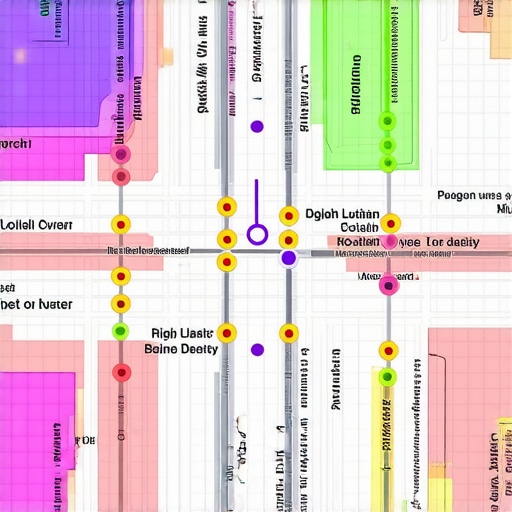
Geogrid tracking tools utilize GPS coordinate salience and proximity weighting to identify local map pack competitors who dominate specific geographic centroids. By analyzing spatial data clusters and local search frequency, businesses can uncover map spam and service area overlaps that traditional SEO tools often overlook or ignore entirely.
The problem with most local reporting is that it is static. You check your rank from your office and see a number one position. You feel successful. Then you drive two blocks away to the coffee shop and your business disappears. This is the proximity filter in action. I call it the three mile wall. Understanding this requires moving beyond basic keyword tracking and into the physics of the map pack. If you want to win, you need to download gmb ranking tools for local seo that actually map out the terrain in a multi-dimensional way.
The ghost in the GPS coordinates
Proximity signals and coordinate-based relevance determine if a Google Business Profile appears in the 3-pack for a specific user location. The local search algorithm calculates distance-weighted authority by measuring the physical displacement between the searcher’s mobile device and the verified business address stored in the Google Maps database.
I once saw a locksmith in Chicago who held the top spot for three years. On the map, he was a king. In reality, he was a ghost. He was using a virtual office that didn’t exist in the physical world. He was a master of manipulating the centroid, but he was vulnerable because his data had no weight. When I looked at the geogrid, I saw his rank drop off like a cliff exactly 500 meters from his fake pin. That is the forensic trace of a spammer. Real businesses have a softer decay. If you are struggling with a sudden ranking drop, the first thing to check is whether a ghost pin has moved into your neighborhood. These entities steal clicks by pretending to be closer than they are. We use specific gmb optimization toolkit for service businesses strategies to identify these anomalies before they drain your lead flow.
“Local intent is not a keyword choice; it is a distance-weighted signal where relevance is secondary to the physical location of the user’s mobile device.” – Map Search Fundamental
Why your physical address is a liability
Address proximity often acts as a ranking constraint rather than an asset when local businesses compete in high-density urban centers. The Vicinity algorithm update increased the mathematical weight of distance, meaning that being physically located in a low-traffic neighborhood can limit map pack visibility for high-value search terms across town.
I see this in the street every day. A beautiful storefront on a quiet side street loses to a mediocre shop on the main boulevard. The algorithm is a logistics manager at heart. It wants the shortest path for the user. If your office is tucked away, you have to work twice as hard on your local business schema to prove you are relevant to the wider city. Sometimes you need seo services to restore map pack visibility because your address was flagged as residential or shared. This is where the geogrid data becomes a weapon. It shows you the exact point where your authority dies. If your map pin fails the proximity test in high traffic areas, you have to adjust your behavioral signals. This means getting more reviews from users who are physically located in those target zones. It is about creating a digital footprint that stretches beyond your physical walls.
The three mile radius that determines your revenue
Geogrid visualizations map the competitive landscape by displaying ranking positions across a grid of coordinates, highlighting local ranking gaps and competitor strongholds. By observing where rankings flicker between search nodes, owners can identify toxic backlink profiles or incorrect business information that creates algorithmic distrust in specific sub-neighborhoods.
When I audit a profile, I do not just look at the dashboard. I look at the heartbeat of the grid. If the circles on the map are green in the center but turn red two blocks north, there is a reason. Maybe a competitor is keyword stuffing their name. Maybe they have better local seo services to fix incorrect business information online helping them maintain NAP consistency across the web. You have to be aggressive.
Local Authority Reading List
- Cleaning up competitor map spam
- Monitoring local pack positions
- Stopping lead loss from profile updates
- Fixing invisible walls in map visibility
How to spot the fake pins stealing your traffic
Map spam detection involves identifying keyword-stuffed business names, falsified physical addresses, and fraudulent review patterns that artificially inflate local search rankings. Utilizing geogrid data allows businesses to see unnatural ranking distributions that indicate a competitor is violating Google’s terms of service to dominate the local 3-pack.
I smell the suspicion every time I see a business named “Best Plumber Near Me City Name.” That is not a brand; it is a trap. Google’s spam team is constantly playing cat and mouse, but the geogrid never lies. If a business has a perfect rank across a 10 mile radius with zero decay, they are likely using a network of fake pins. You need services to clean up spammy backlinks and report these violations. I have spent nights documenting the forensic patterns of these networks. They use the same phone numbers across different cities. They use stock photos for their team. When you find them on the grid, you can reclaim your territory. It is about cleaning up the data environment so the real local merchants can breathe.
Winning the war against local filtration
Local search filtration occurs when Google’s algorithm hides similar business listings to provide diverse search results, often favoring the listing with the highest proximity-authority score. To bypass this, businesses must optimize for behavioral signals like high click-through rates and verified local reviews to prove geographic dominance to the ranking engine.
Sometimes your business is not ranking because Google thinks you are a duplicate of another shop nearby. This is the Opossum filter. It is a silent killer. If you share a building or even just a street corner with a similar category, you might be filtered out of the results entirely. You need a best gmb ranking tools for local seo setup that alerts you when this happens. I have seen businesses lose 80 percent of their traffic because a new competitor moved in next door and triggered the filter. You have to differentiate your signals. Use unique photos. Get reviews that mention specific landmarks. Prove that your coordinate is distinct and valuable. If you need to fix toxic backlink profile issues or services to fix soft 404 and duplicate content issues, do it now. The map does not wait for anyone. The wet concrete is drying, and once the grid is set, it takes a lot of force to move a pin.