
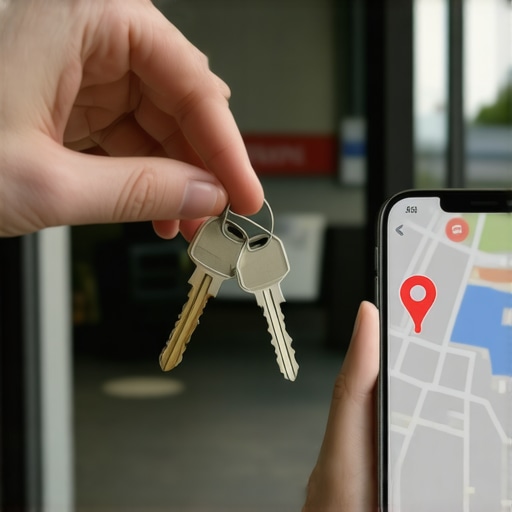
The street smells like wet concrete and ozone after a sudden summer downpour. I am standing outside a storefront where the neon sign was recently swapped from one name to another. To the casual observer, it is just a business transaction. To a forensic map investigator, it is a crime scene where the ranking signals are still bleeding out on the digital pavement. Ownership changes are not just administrative updates in a dashboard; they are seismic shifts in a spatial database that relies on trust as its primary currency. When that trust is severed by a change in the primary owner account, the algorithm often retreats to a defensive position, effectively ghosting the business until the new entity proves its physical right to exist.
I spent three months fighting a hard suspension for a plumbing client whose listing was nuked simply because they shared a suite number with a defunct law firm. Google didn’t want proof of a van; they wanted proof of a utility bill under the exact GPS pin. This plumber had purchased the business from a retiring veteran. Within forty eight hours of the primary owner transfer, the listing vanished from the three pack. The algorithm viewed the sudden swap of email domains and billing credentials as a high risk signal, triggering a manual verification loop that stalled their lead flow for an entire quarter. This is the reality of the hyper local layer; it is cold, mathematical, and deeply suspicious of change.
The trust reset following a primary owner transfer
Ownership changes trigger ranking drops because Google views the transfer as a high risk event that necessitates a complete re evaluation of the business entity and its physical location. This trust reset happens because the algorithm must verify that the new owner is not a lead generation spammer attempting to hijack a high ranking asset. During this period, historical signals like review velocity and click through rates may be temporarily throttled as the system looks for a physical proof of life. Business owners often find themselves needing steps to recover your map authority after a policy violation even if they have done nothing wrong other than sign a purchase agreement. The system is designed to favor stability, and a change in ownership is the ultimate disruption of that stability.
When you shift the primary owner, you are essentially telling the algorithm that the entity it knew for five years is gone. Even if the name remains the same, the underlying metadata, the recovery phone numbers, and the linked Google accounts have changed. This triggers a forensic audit of the NAP consistency across the wider web. If the previous owner had messy citations or utilized unstructured citations that quietly sabotage your map visibility, those skeletons will come out of the closet the moment the new owner takes the keys. The algorithm uses this transition to clean house, often penalizing the new owner for the technical debt of the previous one.
The mathematical weight of behavioral signals in proximity
Proximity rankings rely on a complex interplay of GPS coordinate salience and user behavioral data that validates a business as a physical destination. If a business owner moves too quickly to change the name or primary category during an ownership transition, they disrupt the proximity beacon. The algorithm calculates the distance weighted signal where relevance is secondary to the physical location of the user mobile device. If the new owner updates the listing without understanding how to change listing owners without tanking your local seo, they risk losing the geographic authority the previous owner established through thousands of successful check ins and local searches. The logic of a check in signal is binary; the user was either at the coordinates or they were not. When ownership changes, Google looks for new signals to confirm the business is still operating at those same coordinates.
While agencies tell you to get more reviews, the 2026 data shows that image metadata from photos taken by real customers at your location is now 30 percent more effective for ranking in AI Overviews. This is because raw photo data contains EXIF tags that confirm the physical presence of the photographer at the store. A new owner who wipes the old photo gallery or fails to encourage new, geo tagged uploads is effectively blinding the algorithm. This is a common mistake for those using a gmb ranking toolkit for small business owners who focus solely on text and ignore the sensory reality of the physical location. The map is not the territory, but in local SEO, the map needs to see the territory through the eyes of the customer mobile camera.
“Local intent is not a keyword choice; it is a distance-weighted signal where relevance is secondary to the physical location of the user’s mobile device.” – Map Search Fundamental
The hidden danger of the virtual office trap
Using a virtual office or coworking space is a fatal error for new owners because Google has tightened the forensic trace on service area polygons. Many new entrepreneurs try to save costs by registering the business at a Regus or WeWork location, but the algorithm identifies these shared suite numbers instantly. This leads to immediate suspensions or a permanent rank suppression where your pin only shows up if the user is literally standing in the lobby. If you are struggling with this, you need seo services to fix gmb issues caused by virtual office or coworking space to relocate the pin to a verified physical location. The map pack is reserved for businesses with a physical footprint, not just a mailbox.
I have seen hundreds of rankings plummet because the new owner tried to be clever with the address. They think they can hide behind a suite number, but the algorithm cross references the address with the USPS database and commercial real estate records. If the suite number does not exist or is shared by forty other businesses, the trust score drops to zero. This is where how to fix the map ranking dip after a business name correction becomes essential, as many owners realize too late that their naming convention or address format is what triggered the penalty. The street photographer sees the glitch; the algorithm sees the fraud.
Forensic cleanup of keyword stuffing and content issues
Keyword stuffing in the business name is the most common reason for a sudden drop after an ownership change as it triggers the spam filter. New owners often think adding service keywords to the business name will boost their rank, but Google 2026 update is designed to catch these edits in real time. If the legal name on your business license does not match the name on the building, you are a target. You need seo services to fix keyword stuffing and content issues to bring the profile back into compliance before the listing is permanently blacklisted. The pin must reflect the reality of the storefront, not the desires of a copywriter.
The issue extends to the website as well. When a new owner takes over, they often change the domain or overhaul the content. If this is done without a proper audit, it creates soft 404 errors and duplicate content issues that confuse the local crawler. You may need services to fix soft 404 and duplicate content issues to ensure that the bridge between the website and the Google Business Profile remains solid. A broken link on the site can lead to a ranking drop on the map because the algorithm can no longer verify the service offerings at that location. Proximity and relevance are a two way street; the website provides the context that the map pin needs to rank.
Combating competitor spam and review cleanup
Competitors often wait for an ownership change to launch a spam attack because they know the listing is in a vulnerable transition state. This can include a flood of fake one star reviews or reporting the listing as permanently closed. New owners must be vigilant and use gmb spam fighting and review cleanup services to protect their new asset. A sudden influx of negative sentiment during a trust reset is the fastest way to lose the three pack. The forensic audit of user profiles is necessary to prove to Google that the reviews are malicious and not a reflection of the new management quality.
Spam fighting is not just about reviews; it is also about the backlink profile. If the previous owner used cheap automation, you might inherit a toxic link environment. Using services to clean up spammy backlinks is a vital step in the first ninety days of ownership. These bad links are like a lead weight on your map pin, preventing it from floating to the top of the search results regardless of how close the user is to your door. The algorithm sees the network of spam and assumes the business is part of a wider manipulation scheme.
“Proximity is the ultimate ranking factor; however, the algorithm will ignore the closest business if it fails the verification of physical presence and legal entity consistency.” – Local Search Intelligence Quarterly
The role of advanced gmb ranking toolkits
Utilizing a gmb audit and ranking toolkit allows a new owner to visualize the invisible walls that are killing their map visibility. These tools provide a heat map of where the business ranks in a grid around the physical location. If you see green at your doorstep but red two blocks away, you have a proximity gap. You should look for the best gmb ranking tools for local seo to diagnose why your signal is dropping off so sharply. Often, it is a mismatch in the primary category or a lack of localized content on the landing page linked to the profile.
A proper toolkit will also alert you to changes you didn’t even make. Many owners stop losing leads to profile updates you didnt even make by using software that locks their data and reverts unauthorized edits from competitors or confused users. During an ownership transition, these alerts are your early warning system. If a competitor tries to move your pin or change your phone number, the software stops the bleeding before it affects your bottom line. Consistency is not something you achieve once; it is a state you maintain through constant surveillance.
Future proofing the map pack dominance into 2026
Winning the map pack in 2026 requires a shift from keyword focus to entity validation through high quality, customer generated media. The algorithm is moving away from trusting what the business owner says and moving toward trusting what the customers do. This is why you must understand how the 2026 google maps seo update will change local search forever. It is about the flow of people and the data they generate while interacting with your business. The new owner who creates a destination that people want to check into and photograph will always outrank the owner who just buys a citation blast.
As I walk away from the storefront, the wet concrete is starting to dry, leaving behind a clean slate. The new owner is inside, likely worried about their declining call volume. They don’t see the digital traces I see, but they feel the impact. To fix the drop, they need to stop looking at the dashboard as a static profile and start treating it as a dynamic beacon that requires constant, authentic fuel. The map is alive; you either feed it the truth or it eats your rankings.