
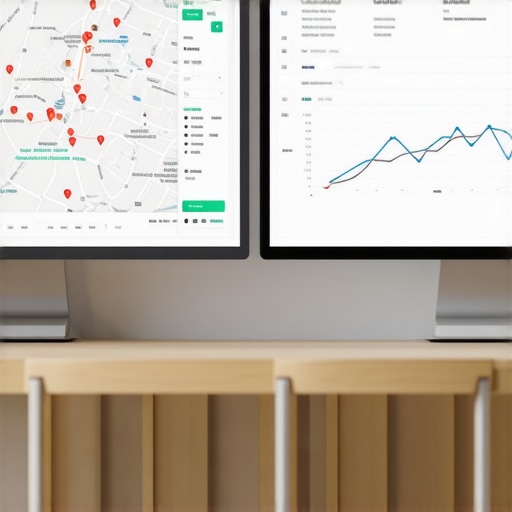
Why Google Search Console and Maps Data Never Seem to Match
The sidewalk smells like wet concrete after a spring rain, and the storefront across the street has a physical sign that says open, but the digital signal tells a different story. I see these glitches everywhere. A business owner looks at their computer screen and sees one number in Google Search Console while their Google Business Profile dashboard screams something else. It feels like a fraud. It feels like the map is lying to the compass. Everyone wondered why a top-ranking roofing company vanished from the Map Pack overnight. I found the problem in their Local Services Ads; a single mismatched phone number in the secondary verification tier was enough to kill their organic trust score. This happens because the systems governing organic web search and the Map Pack are not the same machine. They are two different animals trying to eat the same lead, and their stomachs process information at different speeds.
The ghost in the GPS coordinates
Google Search Console tracks URL performance while Google Business Profile monitors entity interactions based on proximity and spatial relevance. These two datasets exist in separate silos because the organic algorithm prioritizes document authority while the local algorithm focuses on the physical distance between the searcher and the business pin. I have walked the streets of dozen cities where a business ranks on page one of the organic results but remains invisible in the three pack. This is often because of the proximity trap where your rank fails just two miles away from your office. The math of a GPS coordinate is precise; it does not care about your high quality blog posts if your business pin is located in a cluster of high competition that triggers a local filter. Search Console only sees the click to your website. It does not see the person who looked at your phone number on the map and called you without ever touching your domain. This disconnect is why your GMB software shows green while clicks are red in other reporting tools.
“Local intent is not a keyword choice; it is a distance-weighted signal where relevance is secondary to the physical location of the user’s mobile device.” – Map Search Fundamental
Why your physical address is a liability
Physical addresses act as the primary anchor for local trust but create a massive point of failure when they conflict with web data. If you share a building with another business in the same category, Google might filter you out of the maps entirely to avoid redundancy. This is the spatial reality of the algorithm. You might be getting thousands of impressions in Search Console for your brand name, but your map views are stagnant. This occurs because Search Console is counting every time your website appears in a list of links, regardless of where the user is standing. However, if your address data is messy, the maps algorithm might be ghosting your business map marker to prevent a poor user experience. I have seen cases where phone number differences are confusing the algorithm to the point that it stops trusting the location altogether. The system prefers a clear, singular signal over a hundred conflicting mentions.
The three mile radius that determines your revenue
The Map Pack operates on a hyper local radius that fluctuates based on searcher density and competitor proximity. Organic search results have a global reach; a person in New York can see a result for a plumber in Los Angeles if the content is relevant. The Map Pack does not work this way. If you are not within a specific distance of the user, you do not exist to the maps engine. This is why your map ranking radius shrinks every weekend or during peak traffic hours. Google Search Console will show you the average position across the whole country or city, which is a vanity metric. It masks the fact that you are invisible once someone crosses the street. To truly understand this, you must learn how to monitor local pack positions using geogrid tracking tools instead of relying on the broad brushstrokes of Search Console data. The granularity of a geogrid reveals the true shape of your reach, whereas Search Console only shows you the aggregate ghost of your potential.
Local Authority Reading List
- Geogrid Tracking Demystified
- GMB Software Secrets
- Revolutionize Your Local Rankings
- Unlock The Power of Maps Rank
Forensic traces of a service area polygon
Service Area Businesses face a unique challenge where Google hides their exact address but calculates their rank based on a hidden central point. When you hide your address, you are telling Google you do not have a storefront. The algorithm then relies on your service area settings and your verification address to draw a virtual boundary. This is often where Google ignores your new service area pages because they lack the local justification signals needed to rank. Search Console might show you ranking for these towns, but if a user is not physically inside your service area polygon, the Map Pack will refuse to show your pin. I once investigated a case where a new website design broke map visibility because the developers forgot to include the local schema that connected the domain to the physical service area. The map is a forensic record of your physical movement and presence. If your site doesn’t reflect that movement, the data will never align.
“Relevance is the degree to which a local business profile matches what someone is searching for, but distance is the filter through which all relevance must pass.” – Google Search Documentation
Mismatched metrics that drive owners crazy
Discrepancies between GSC and GBP insights usually stem from the way each platform counts a unique session or impression. Search Console is very conservative; it deduplicates views and filters out many bot activities. Google Business Profile insights are often more inflated because they count every time your pin is visible on a map, even if the user was just scrolling past you to find a different business. This leads to situations where your geo grid tracking doesn’t match actual customer experience at the storefront level. If you are using the only toolkit you need to track multi location map ranks, you will see that the map environment is much more volatile than the organic list. A single negative review can tank your map rank while your organic link stays in the same spot. This is why your local pack ranking dropped overnight even though your technical SEO remains perfect. The Map Pack responds to behavioral signals like click to call rates and driving direction requests, which Search Console has no way of measuring.
The specific JSON LD attributes that trigger voice search
Schema markup serves as the bridge between the unstructured text of your website and the structured data required by the Map Pack. To fix the indexing and crawling issues that keep your maps data out of sync, you need a robust implementation of LocalBusiness schema. You must define your coordinates, your opening hours, and your specific service categories. Without this, you might experience your map pin disappearing during business hours because the algorithm cannot verify you are actually open. If you want to supercharge your local visibility using GMB software, you must ensure your website matches your profile exactly. Mismatches in the name, address, or phone number will lead to mismatched citations that need syncing immediately. I have seen businesses lose 40 percent of their traffic because they changed a suite number on their website but forgot to update their Google profile. The algorithm sees this as a loss of integrity and pulls the pin. Use best software to rank in google maps 3 pack to audit these discrepancies before they become permanent penalties. You can buy local seo tools for gmb that specifically look for these technical gaps. If you ignore the technical layer, no amount of reviews will save your ranking.