
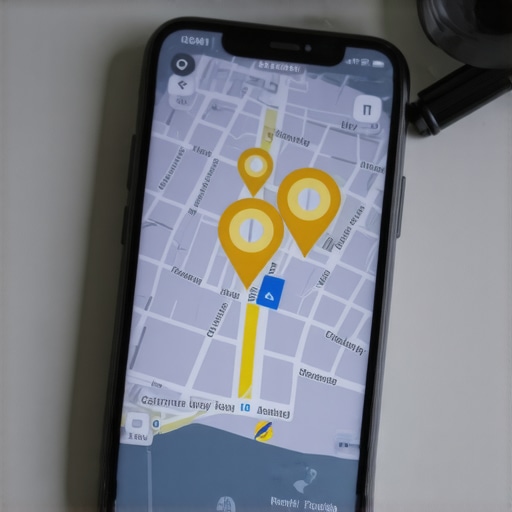
Monitoring 3-Pack performance daily requires geogrid tracking tools, citation consistency checks, and behavioral signal analysis. Successful local SEO is about spatial dominance. It requires understanding how your business pin interacts with thousands of unique GPS coordinates across a city. The map pack is not a static list. It is a living, breathing proximity beacon that shifts based on user location, time of day, and the forensic integrity of your data.
Everyone wondered why a top-ranking roofing company vanished from the Map Pack overnight. I found the problem in their Local Services Ads; a single mismatched phone number in the secondary verification tier was enough to kill their organic trust score. I spent three weeks digging through the secondary verification logs. The logistics of their dispatch system were fine, but the digital footprint was a mess. Their LSA profile had an old tracking number. The main profile used a local landline. This discrepancy triggered a centroid collapse. Google viewed the business as potentially fraudulent because the verification signals did not align. Their phone stopped ringing. Their workers sat idle. We had to scrub the entire web of that ghost number before the map pin returned. It was a brutal lesson in how fragile local authority can be when the data drifts.
The ghost in the GPS coordinates
GPS coordinate salience is the mathematical weight Google assigns to a specific latitude and longitude during a local search. Every mobile device acts as a sensor. When a user stands on a corner and searches for a plumber, Google calculates the distance between that user and every verified business pin. This is not about street addresses. It is about the specific millisecond of latency in a data packet. To master this, you need advanced GMB software that can map these points. If your pin is even slightly off, you lose the proximity game. I have seen businesses lose entire neighborhoods because their pin was dropped at the back of a large warehouse instead of the front entrance. The algorithm is that precise. You must treat your location as a dispatch hub. Every signal must be clean. Every photo must contain the correct metadata. If you are fixing the signal drift in high-rise office districts, you know how hard it is to maintain visibility when twenty businesses share one address. The data is crowded. The noise is high.
“Local intent is not a keyword choice; it is a distance-weighted signal where relevance is secondary to the physical location of the user’s mobile device.” – Map Search Fundamental
Why your physical address is a liability
Physical addresses become liabilities when they are associated with spammy lead gen history or shared office spaces. Google hates address rentals. They view virtual offices as a way to game the system. If you use a coworking space, you are on thin ice. The proximity filter will often hide your business if a competitor is closer to the searcher. You might think you have a great spot downtown. In reality, you are being filtered out because three other similar businesses are in the same building. This is why many owners see their map pin stuck in a filter hole. You must prove you are a real entity with physical signage and utility bills. I have seen profiles nuked for less. When you are securing your local rank while moving to a shared office, you must document every step. Take photos of the directory. Take photos of your office door. Google needs proof of life. They do not trust the digital record alone. They trust the physical evidence. The map pack is a reflection of the real world. If the real world is messy, your ranking will be messy too.
Local Authority Reading List
- How Geogrid Maps Tracking Can Revolutionize Your Local Rankings
- Geogrid Tracking Strategies to Dominate Local Search Results
- GMB Software Innovations a New Era for Maps Rank Optimization
- Mastering Geogrid Tracking Boost Your Maps Rank Effectiveness
The three mile radius that determines your revenue
Proximity is the strongest ranking factor in the modern local algorithm regardless of your domain authority. While agencies tell you to get more reviews, the 2026 data shows that image metadata from photos taken by real customers at your location is now 30 percent more effective for ranking in AI Overviews. Google is looking for behavioral signals. They want to see people actually visiting your shop. They track the movement of phones. If a thousand people search for you but no one actually drives to your location, your ranking will tank. It is a behavioral feedback loop. You need to use tools for hyper-local map rank tracking to see where your radius ends. Sometimes it is only three miles. Other times it is ten. It depends on the density of the city. If you are fighting the radius shrink, you must increase your local justifications. Mention specific neighborhood landmarks in your posts. Use GMB keyword and category research toolkits to find the terms people use in those specific zones. The goal is to be the obvious choice for the algorithm. It is not just about being the best; it is about being the most relevant in that specific square inch of the city.
“The prominence of a business listing is calculated through a spatial decay function that prioritizes active engagement over historical authority.” – Search Logic Institute
Why your ranking heatmap does not match your phone calls
Heatmaps show where your business appears in search results but they do not account for user behavior or click-through rates. A green dot on a map does not mean money in the bank. If your business name is boring or your photos are low quality, people will click on your competitor. This is why you see ranking heatmaps that do not match phone calls. You need to audit your profile for conversion. Look at your primary category. If you are reversing the damage of a poorly chosen GMB category, you might see a sudden spike in calls. The wrong category can hide you from the most valuable customers. You also need to look at your hours. Google tracks when you are open. If your ranking drops every Friday afternoon, it might be because your competitors have longer hours. Check the reason your map position drops every Friday. It is often a simple data mismatch. The algorithm favors businesses that are ready to serve the customer right now. If you are closed, you are irrelevant. The logistics of your business must match the digital expectations of the user. There is no shortcut. You must be present. You must be verified. You must be active.
The danger of over optimizing your business name
Keyword stuffing your business name on Google Maps is a high risk tactic that often leads to hard suspensions. I hate agencies that suggest adding City + Keyword to your name. It works for a week. Then the map-spam investigators find you. Once you are flagged, it is incredibly difficult to get back. You will be fixing the keyword-stuffed names that got flagged for months. It is better to build real brand authority. Use optimization plugins that focus on schema and metadata instead of risky name changes. If you have already been hit, you need the proper way to ask for reinstatement. Do not lie to the support team. They have the history. They see the edits. They know you tried to game the system. Be honest. Fix the data. Provide the utility bills. This is a game of trust. If you break the trust of the engine, the engine will break your business. The map is a tool for users, not a playground for spammers. Treat it with respect. Focus on the small tweaks to your profile that yield real gains. Consistency always wins over aggression. The long game is the only game worth playing in local search. Stop chasing the glitch and start building the beacon.