
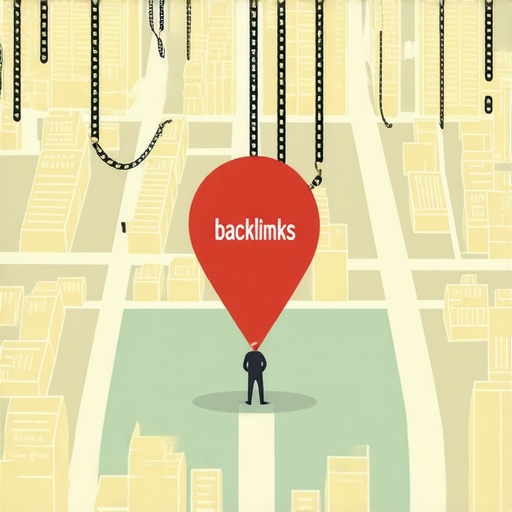
Stop Chasing Local Backlinks That Never Move Your Map Pin
I’ve seen it a hundred times. A local business owner – let’s call him Dave, a plumber in a competitive suburb – spends six months and thousands of dollars on “premium local citations,” guest posts on niche-adjacent blogs, and “high-DA” niche edits. He checks his organic rankings and sees his website has climbed from page four to page two. He’s happy, right? Wrong. Because when Dave looks at the Google Map Pack for “plumber near me,” his business is still stuck at #14, buried under competitors who haven’t updated their websites since 2018.
The frustration is palpable. Dave followed the traditional SEO playbook. He built the links. He played the “authority” game. Yet, his map pin hasn’t budged an inch. If you’re reading this, you’ve likely felt that same stagnation. You’re doing what the “experts” told you to do, but your phone isn’t ringing any more than it was last year. In 2026, the reality of google maps seo has shifted. The “Signal Gap” is what’s killing your growth, not a lack of backlinks.
As a Senior SEO Specialist at GeogridRanker.com, I’m here to tell you that Google Maps operates on a fundamentally different algorithm than the classic blue-link organic search results. While backlinks are the currency of the web, proximity, relevance, and behavioral signals are the currency of the street. If you want to rank higher on google maps, you have to stop treating your Google Business Profile (GBP) like a secondary extension of your website and start treating it as the primary engine of your local visibility.
The Local Backlink Fallacy: Why Your Link Building is Failing the 3-Pack
The biggest mistake I see in local SEO is the assumption that “what’s good for the site is good for the map.” This is the Local Backlink Fallacy. In the traditional organic algorithm, a link from a high-authority site acts as a vote of confidence. However, in the 3-Pack, Google is trying to solve a different problem: “Who is the best, most relevant business physically closest to this user right now?”
According to the Reddit 2025/2026 SEO consensus, the community has reached a tipping point: “weak local backlinks” are officially a waste of resources for map rankings. You can have a backlink from the local Chamber of Commerce – which is great for organic authority – but if your GBP lacks the necessary proximity and relevance signals, that link won’t move your pin. Google’s algorithm is smarter than ever; it knows that a link from a national directory doesn’t mean you’re the best plumber three blocks away from the searcher.
Data from Whitespark’s 2026 Ranking Factors report confirms this shift. For the first time, GBP-specific signals – such as primary category selection, keywords in the business name (though we don’t recommend spamming), and the completeness of the “Services” section – now carry more weight for the 3-Pack than traditional link signals. If you are still prioritizing The Local Backlink Strategy That Actually Moves Your Map Pin, you need to ensure those links are hyper-local and contextually relevant, rather than just high-authority. A link from a local high school football team’s sponsorship page often does more for your map ranking than a guest post on a national home improvement blog because it reinforces your physical location in the “eyes” of the algorithm.
The “Signal Gap” occurs when your website looks like an authority, but your Google Business Profile looks like a ghost town. To bridge this gap, you must pivot your strategy from “link-first” to “signal-first.”
The “Big Three” of 2026: Proximity, Relevance, and Prominence
To dominate local search, you must understand the holy trinity of the map algorithm. These three factors determine whether you appear in the coveted 3-Pack or if you’re relegated to the “More Businesses” abyss.
1. Proximity: The Distance Filter
Proximity is the most powerful, yet most frustrating, ranking factor. It is the reason why your business might be #1 when you’re standing in your office, but #15 when you walk two blocks away. Google uses “Distance Filters” that can be significantly more powerful than domain authority. This is Why Your Business Disappears When Customers Walk One Block Away. In 2026, Google’s ability to pinpoint a user’s location is surgical. If a competitor is physically closer to the searcher, you have to work twice as hard on Relevance and Prominence to overcome that distance gap.
2. Relevance: The Topical Map
Relevance is how well your business matches the intent of the searcher. This is where google business profile seo really happens. It’s not just about your primary category. It’s about your secondary categories, your “Services” menu, and even the text within your reviews. Google builds a “Topical Map” of your business. If you’re a “Family Law Attorney” but you don’t have “Child Custody” or “Divorce Mediation” listed in your services, you won’t rank for those specific long-tail searches, regardless of how many backlinks your homepage has.
To maximize relevance, you need to use professional google business profile seo tools to ensure every field in your profile is optimized with the keywords your customers actually use.
3. Prominence: The Digital Footprint
Prominence is Google’s measure of how well-known your business is. This is where traditional SEO factors like backlinks and brand mentions come into play, but they are joined by a much more important factor: reviews. Not just the number of reviews, but the velocity (how often you get them) and the sentiment (what people are saying). A business with 50 recent, keyword-rich reviews will often outrank a business with 200 reviews from three years ago. Prominence is also built through local media mentions and consistent NAP (Name, Address, Phone number) data across the web.
The 10-Review Threshold and the AI Visibility Shift
One of the most significant changes we’ve tracked in 2026 is what we call the “10-Review Threshold.” New data from Local Dominator suggests that Google’s local algorithm – and its newer AI-powered Search Generative Experience (SGE) – now applies a “trust filter” to businesses with fewer than 10 reviews.
Essentially, if you haven’t hit that double-digit mark with recent, high-quality engagement, the AI search results will often bypass your business entirely, even if you are the closest option. This is part of the How the 2026 Google Maps SEO Update Will Change Local Search Forever. AI-powered search prioritizes engagement over raw link counts. It looks at “Behavioral Signals” – things like how many people click “Call,” how many request directions, and how many users dwell on your profile photos.
In this new landscape, behavioral signals are the “new backlinks.” When a user clicks your profile and spends 30 seconds looking at your project photos, that is a massive ranking signal to Google that your business is relevant and high-quality. If you’re spending your budget on link building but neglecting your review generation and photo updates, you are effectively building a house on a foundation of sand. You need a dedicated gmb ranking service that understands how to stimulate these behavioral signals through genuine customer interaction and profile optimization.
Why Geogrid Tracking is the Only Way to See the Truth
If you are still using a traditional rank tracker that tells you your “average position” for a keyword is 3.2, you are flying blind. In local SEO, an “average” doesn’t exist. Your ranking is a living, breathing heatmap that changes with every square meter of the city.
This is why Enhance Your Local SEO with Cutting-Edge Geogrid Tracking Tools is no longer optional – it is a requirement for survival. Geogrid tracking allows you to see exactly where your “search radius” ends. You might find that you dominate the three blocks surrounding your office (ranking #1), but as soon as you cross a major highway or enter a neighboring zip code, you drop to #10.
These “Proximity Gaps” are the roadmaps to your next marketing moves. Without a geogrid, you might think you need more backlinks. But with a geogrid, you might realize that you actually need more geo-tagged photos from that specific neighboring zip code or a few reviews from customers who live in that area. Traditional tools tell you *if* you are winning; local seo tools like geogrids tell you *where* you are winning and *why* you are losing elsewhere. It’s the difference between a static map and a GPS with real-time traffic data.
By visualizing your data this way, you can stop wasting money on broad “national” SEO tactics and start applying “surgical” local tactics where they are actually needed. If your geogrid shows a “dead zone” to the North, you can target your local ad spend and review requests to that specific area to expand your “ranking bubble.”
Technical GBP Optimization: Moving the Pin Without a Single New Link
You would be shocked at how much ground you can gain simply by fixing the technical errors on your Google Business Profile. Many businesses are leaving money on the table because of “Profile Gaps” – missing information that prevents Google from fully trusting the profile. To rank google business profile effectively, you need to treat the technical setup with the same rigor as on-page SEO.
Here is a 2026 checklist for technical google business profile optimization:
- Primary and Secondary Categories: Your primary category should be your most profitable, high-volume service. But don’t ignore secondary categories. If you’re a “Heating Contractor,” make sure you also list “Air Conditioning Contractor” and “HVAC Repair Service.”
- “Service” Descriptions: Most people just check the boxes for the services they offer. In 2026, you need to write unique, 300-character descriptions for *each* service. This is where Google’s AI parses keywords to determine relevance. Don’t just say “Leaky Pipe Repair.” Describe the process, the tools you use, and the areas you serve.
- High-Resolution, Geo-Tagged Photos: Stop using stock photos. Google’s Vision AI can detect stock imagery, and it provides zero ranking value. Upload real photos of your team, your trucks, and your completed jobs. Use tools to ensure the metadata includes the latitude and longitude of the job site.
- Q&A Section: Don’t wait for customers to ask questions. Populate the Q&A section yourself with frequently asked questions. This is prime real estate for long-tail keyword relevance.
- GBP Posts: Treat your GBP like a social media feed. Post at least twice a week with updates, offers, and “behind the scenes” content. This signals to Google that the business is active and engaged.
If you haven’t performed a deep dive into these areas, you should start with The 3-Step Google Maps SEO Audit That Actually Finds Ranking Gaps. Often, resolving a category conflict or adding missing service descriptions can move a pin from #7 to #3 in a matter of days – something no amount of backlink building can achieve in that timeframe.
Furthermore, ensure your website’s “Location Page” is perfectly synced with your GBP. The “Local SEO Landing Page” should contain an embedded Google Map of your business, your NAP data in Schema markup, and localized content that mentions nearby landmarks and neighborhoods. This creates a “Relevance Loop” between your site and your map pin.
Conclusion: Stop Wasting Your Budget on “Ghost” Signals
The SEO industry has a habit of clinging to old habits because they are easy to sell. Link building is easy to quantify in a monthly report, but if those links aren’t moving the needle on your local phone calls, they are “ghost” signals – metrics that look good on paper but provide no ROI.
In 2026, the map pin moves when Google trusts your physical location and your relevance to the user’s intent. This trust is built through proximity, consistent engagement, and a technically flawless Google Business Profile. If you want to dominate the 3-Pack, you must bridge the “Signal Gap” by focusing on what actually matters to the local algorithm.
Stop chasing the next “high-DA” link and start looking at your business through the lens of a geogrid. Run a Geogrid audit today. See where your visibility drops off. Identify the competitors who are stealing your leads simply because they have better “Services” descriptions or more recent reviews. The data is there – you just have to use the right google business profile optimization tools to see it.
Your customers are searching for you right now. Whether they find you or your competitor depends entirely on whether you are sending the right signals to the map. It’s time to stop building links and start building a local powerhouse.