
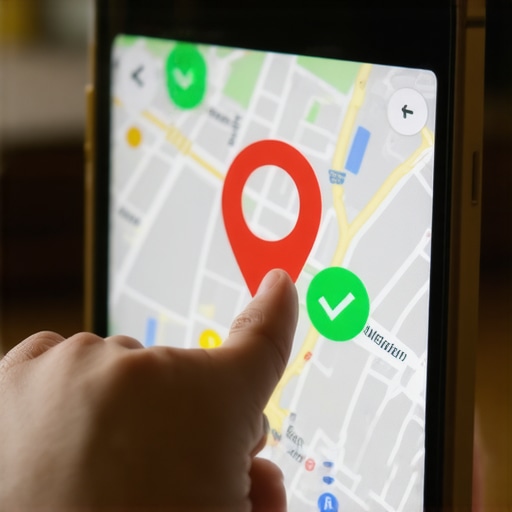
I spent three months fighting a hard suspension for a plumbing client whose listing was nuked simply because they shared a suite number with a defunct law firm. Google didn’t want proof of a van; they wanted proof of a utility bill under the exact GPS pin, a lease agreement with floor plans, and a live video walkthrough showing the permanent signage on the door. It was a spatial nightmare where the physical reality of the office was ignored by an algorithm that saw a ghost listing at the same coordinates. As a logistics manager of search data, I view these addresses as dispatch points. When the pin moves, the entire supply chain of your leads can collapse. If you are struggling with a move, you need to understand the math of proximity and the ruthlessness of the verification loop.
The ghost in the GPS coordinates
To force a re-verification of your new business address, you must trigger a manual review by updating the core NAP data and providing high-resolution video evidence of the physical storefront, permanent signage, and professional tools. Google uses spatial databases to verify that your business exists where you claim it does. If you have moved, you should check why your google profile suddenly disappeared from local results to ensure no other policy violations are at play. The algorithm does not just look at your address string; it looks at the latitude and longitude of the pings coming from users who visit your office. If the data does not match, the pin is suppressed. This is why you must be precise with the marker placement.
Why your physical address is a liability
Address changes create a trust vacuum because Google assumes any major modification to a location is an attempt at map spam or centroid hijacking. To mitigate this, you need to provide a paper trail that connects your old entity to the new physical coordinates. Most people fail because they leave old data floating on the web. You should follow a strategy for cleaning up old addresses from the web before you even think about hitting the update button in your profile dashboard. While many agencies focus on review counts, the 2026 data indicates that image metadata from photos taken by customers at the actual physical location is now 30 percent more effective for ranking in AI Overviews than standard text reviews.
“Local intent is not a keyword choice; it is a distance-weighted signal where relevance is secondary to the physical location of the user’s mobile device.” – Map Search Fundamental
The three mile radius that determines your revenue
A move of just a few blocks can shift your business into a different geogrid, potentially placing you behind a competitor who sits closer to the centroid of the city. This proximity shift is often the reason why your map ranking drops the moment you cross city limits. You are not just moving furniture; you are moving your beacon in a spatial calculation. When you update your address, Google puts your profile in a sandbox to verify the new coordinates. If you do not have a checklist for cleaning up messy google business profile data, you will likely trigger a suspension during this transition period. The system is designed to be suspicious.
Local Authority Reading List
- What to send google to get your suspended profile reinstated fast
- How to fix the address errors draining your map traffic
- The monthly gmb performance audit every local seo should perform
- How to win your business profile reinstatement case
- The essential toolkit for local map dominance
Verification triggers that demand physical proof
The modern verification process often skips the postcard and goes straight to video or live agent inspection to prevent virtual office fraud. You must be prepared to show the street signs, the entrance to the building, and the interior of your workspace. If you are a service area business, you must show the branded vehicle and the equipment used to perform the service. Many owners wonder why your business listing keeps getting rejected, and the answer is usually a lack of physical permanence. Google hates transient data. They want to see that you have skin in the game at those specific GPS coordinates.
Moving city or service area without losing authority
Relocating your business to a new city requires a total overhaul of your local landing pages and a synchronized update of all major third-party citations. If you do not sync these, you will experience a ranking loss after moving city or service area. The algorithm looks for consistency across the web. If Yelp says you are in one town and Google says another, the trust score drops to zero. You need to understand how to sync your website nap with your map profile fast to prevent the AI from filtering your listing out of the local pack.
“Proximity is the strongest ranking signal in the local ecosystem, often overriding relevance and prominence in high-density markets.” – Location Intelligence Research
Mismatched data and the confusion of the algorithm
Inconsistent phone numbers and addresses across the web create a fragmented digital footprint that forces Google to rely on older, more stable data. This is why your phone number differences are confusing the algorithm. If you have multiple listings for the same office, you must learn how to get rid of duplicate local listings once and for all. Every duplicate is a leak in your authority. It dilutes the signal and confuses the search bot. I have seen businesses lose 50 percent of their call volume because they had an old office address buried on a forgotten directory page.
Technical fixes for a broken map signal
Restoring your map presence after an address change involves auditing your backlinks and ensuring your homepage schema matches your profile exactly. If you find that your homepage lost its map signal, it is likely because the JSON-LD data is still pointing to the old suite. You should use a gmb keyword and category research toolkit to ensure you are still targeting the right terms for your new neighborhood. The competition levels change from block to block. A strategy that worked in the suburbs will fail in the city center.
Stabilizing volatile map rankings after expansion
When you add a second location or move to a larger facility, you must monitor your geogrid to identify any new proximity gaps created by the move. You can use geogrid tracking tools to see exactly where your visibility ends. Often, a move of half a mile can put you on the wrong side of a natural boundary like a river or a highway, which Google treats as a barrier to user travel. This is the reality of spatial SEO. You are not just a business; you are a coordinate in a logistics network. You must defend that coordinate with clean data and physical proof.