Unveiling the Strategic Power of Geogrid Tracking in Local SEO Optimization
In the fiercely competitive realm of local search visibility, leveraging advanced geogrid tracking techniques has become indispensable for digital marketers aiming to dominate Google Maps rankings. This comprehensive approach combines spatial data analytics, algorithmic insights, and cutting-edge software solutions to elevate local SEO performance. Understanding the nuanced mechanics of geogrid tracking enables professionals to craft data-driven strategies that yield tangible results in search engine dominance.
Deciphering the Layers of Geogrid Mapping for Sophisticated Local Search Domination
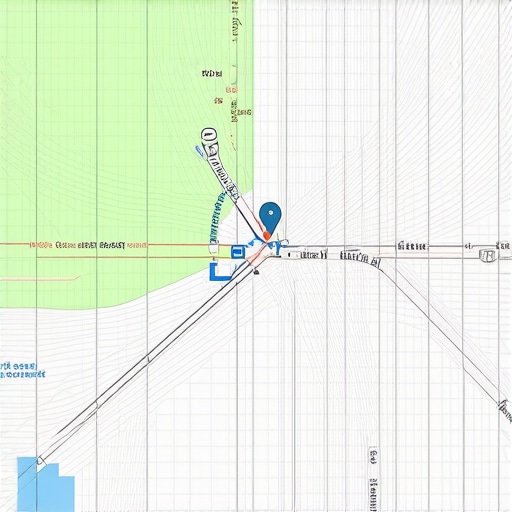
At its core, geogrid mapping involves segmenting a targeted geographic area into a matrix of grid cells, each representing a specific location. Integrating real-time data collection and analysis across these cells allows marketers to identify ranking fluctuations, spot opportunities, and troubleshoot inconsistencies. The challenge lies in optimizing the granularity of these grids—balancing between broad coverage and precise pinpointing of ranking shifts. Advanced software like GMB software innovations provides the tools necessary for such granular tracking, ensuring an authoritative edge in local search strategies.
Incorporating Spatial Intelligence to Overcome Algorithmic Variability
Google Maps rankings are inherently dynamic, fluctuating due to algorithm updates, local competition, and user behavior patterns. By employing geogrid tracking, marketers can monitor these fluctuations spatially, gaining insights into how local algorithms respond to various signals. For example, analyzing ranking stability across different grid cells can reveal areas where Google’s algorithm is more sensitive, allowing for targeted optimization efforts. This spatial intelligence is crucial for adapting strategies swiftly and effectively, especially when combined with GMB software that offers comprehensive analytics and reporting features.
What Are the Most Effective Metrics for Geogrid-Based Local SEO Performance?
Expert practitioners emphasize tracking metrics such as rank stability, movement patterns, visibility scores, and user engagement rates within each grid cell. These indicators help in assessing the impact of SEO efforts and identifying areas requiring further optimization. Incorporating machine learning models to predict ranking trajectories based on historical geogrid data enhances strategic foresight, ensuring sustained local search success.
How Can Geogrid Tracking Surpass Traditional Local SEO Tactics?
While traditional tactics focus on keyword optimization and citation building, geogrid tracking introduces a spatial dimension that refines targeting accuracy. It enables real-time detection of ranking anomalies and localized trends, fostering a proactive approach rather than reactive adjustments. This precision ensures resource allocation aligns with areas of maximum potential, elevating overall campaign ROI.
For those seeking to deepen their mastery of local SEO, exploring advanced GMB software strategies can provide a competitive edge. Moreover, consulting authoritative sources such as Moz’s local search guides can solidify your understanding of geospatial ranking factors.
Engage with community forums or industry groups to share insights and adapt emerging techniques for 2024 and beyond. The future of local SEO hinges on harnessing spatial analytics—making geogrid tracking an essential pillar of your digital marketing arsenal.
Leveraging Multi-Layered Geogrid Analytics for Next-Level Local Search Domination
In the evolving landscape of local SEO, the integration of multi-layered geogrid analytics offers unprecedented precision and actionable insights. Moving beyond basic spatial segmentation, sophisticated geogrid systems incorporate layered data—such as demographic variables, user behavior patterns, and real-time environmental factors—to refine targeting and optimization efforts. These enhanced models enable marketers to pinpoint not just where ranking fluctuations occur, but why they happen in specific contexts, leading to more strategic campaign adjustments.
For instance, combining geospatial data with demographic overlays can reveal that certain neighborhoods respond differently to SEO tactics, prompting tailored strategies that maximize impact. Advanced software solutions, like those discussed in effective maps rank optimization, facilitate the integration of these complex layers, transforming raw data into strategic gold.
What Are the Nuances of Machine Learning Integration with Geogrid Tracking?
One of the most compelling developments in geogrid tracking is the incorporation of machine learning algorithms. These models analyze historical and real-time data to predict ranking trajectories, identify emergent trends, and recommend proactive interventions. By training on extensive geospatial datasets, machine learning can uncover subtle patterns—such as localized ranking sensitivities or seasonal fluctuations—that would be imperceptible through manual analysis alone.
This approach not only enhances predictive accuracy but also streamlines decision-making processes, allowing local SEO experts to allocate resources more efficiently. To explore how such integrations can be implemented effectively, consult resources like proven geogrid tracking techniques.
How Can Marketers Overcome the ‘Black Box’ Perception of AI-Driven Geospatial Analytics?
While AI and machine learning offer powerful tools, skeptics often perceive them as opaque “black boxes” that lack transparency. Overcoming this challenge requires implementing explainable AI models that provide clear rationales for their predictions and recommendations. By integrating transparent analytics dashboards and documenting algorithmic logic, marketers can build trust and foster more strategic adoption of these advanced tools. This nuanced understanding ensures that AI-driven insights complement human expertise rather than replace it, fostering a collaborative environment for local SEO success.
To deepen your understanding and stay ahead in the competitive local search space, consider exploring mastering maps rank with geogrid tracking.
Engage in industry forums or attend webinars where experts share case studies and best practices for integrating AI with geospatial SEO techniques—these insights can significantly accelerate your strategic mastery in 2024 and beyond.
Harnessing Multi-Dimensional Data Layers to Elevate Local Search Precision
Building upon the foundation of multi-layered geogrid analytics, integrating additional data dimensions such as socio-economic profiles, real-time environmental factors, and local infrastructure developments can significantly refine your targeting. This holistic approach enables marketers to anticipate ranking fluctuations driven by external influences, thereby enabling preemptive optimization strategies. For example, incorporating live traffic data and local event schedules can reveal temporal ranking shifts, allowing for dynamic campaign adjustments that maximize visibility during peak engagement periods.
Advanced software solutions, like those highlighted in advanced mapping analytics, facilitate the synthesis of these complex data streams, transforming raw inputs into actionable insights that inform strategic decision-making. This level of analysis not only enhances current ranking stability but also builds resilience against sudden algorithmic changes or local disruptions.
Integrating Predictive Modeling with Geospatial Data for Future-Proof SEO Strategies
Predictive modeling, powered by machine learning algorithms trained on extensive geospatial datasets, opens new vistas for forward-looking local SEO strategies. By analyzing historical data alongside real-time signals, these models forecast ranking trajectories, identify emerging hotspots, and suggest optimal timing for campaign intensification. For instance, predictive analytics can reveal seasonal trends in specific neighborhoods, guiding resource allocation for maximal impact.
According to authoritative research by Sage Journals, predictive analytics in spatial contexts significantly improve the accuracy of local ranking forecasts, reducing guesswork and enhancing ROI. Integrating these insights into your SEO workflow ensures a proactive stance, rather than reactive, positioning your brand ahead of competitive shifts.
What Are the Critical Challenges in Scaling Multi-Layered Geogrid Analytics?
While the benefits are profound, scaling multi-layered geogrid analytics introduces challenges such as data integration complexity, computational resource demands, and maintaining data accuracy across diverse sources. Ensuring seamless synchronization of heterogeneous datasets requires sophisticated data management frameworks and robust API integrations. Additionally, as the volume and velocity of data grow, leveraging cloud computing infrastructure becomes essential to sustain processing efficiency.
Expertise in data science, combined with strategic technology investments, is crucial for overcoming these hurdles. For instance, employing scalable platforms like Google Cloud or AWS, paired with advanced ETL (Extract, Transform, Load) pipelines, can streamline data workflows and ensure high-quality, timely insights. Continued education in data engineering practices and cloud architecture is vital for teams aiming to exploit multi-layered geogrid analytics at scale.
How Can Marketers Effectively Communicate Complex Geospatial Insights to Stakeholders?
Conveying intricate geospatial analytics to diverse stakeholders necessitates clarity and compelling visualization. Interactive dashboards that highlight key metrics, trend lines, and predictive forecasts enable non-technical audiences to grasp strategic implications quickly. Tools like Tableau, Power BI, or custom GIS platforms can generate intuitive visual narratives that translate complex data into actionable stories.
Moreover, fostering a culture of data literacy within your team ensures ongoing stakeholder engagement and informed decision-making. Regular workshops, visual storytelling, and transparent reporting practices are essential components of this communication strategy. As spatial analytics evolve, the ability to articulate their strategic value will distinguish leading local SEO practitioners from competitors.
To deepen your mastery of these advanced techniques, explore resources like innovative approaches in spatial SEO and participate in industry forums dedicated to geospatial data science.
Harnessing the Next Wave of Geospatial Data Integration for Local SEO Mastery
As the digital landscape continues to evolve, integrating layered geospatial data—such as socio-economic indicators, environmental factors, and infrastructural developments—becomes crucial for sophisticated local SEO strategies. These multi-dimensional datasets enable marketers to anticipate ranking fluctuations driven by external influences, facilitating preemptive optimization efforts that outperform traditional reactive tactics. For instance, harnessing real-time traffic analytics alongside demographic overlays reveals temporal shifts in visibility, empowering dynamic campaign adjustments that maximize local engagement.
The Synergy of Predictive Analytics and Spatial Intelligence in Future-Proof SEO
Predictive modeling, particularly when powered by machine learning algorithms trained on extensive geospatial datasets, offers unprecedented foresight into ranking trajectories. By analyzing historical patterns and real-time signals, these models forecast emerging hotspots, seasonal trends, and potential disruptions, guiding resource allocation and strategic planning. A pivotal study published in Sage Journals underscores how predictive analytics in spatial contexts not only enhance accuracy but also substantially increase ROI by reducing guesswork and enabling proactive decision-making.
Addressing the Challenges of Scaling Multi-Layered Geospatial Analytics
Scaling complex geospatial data integration presents notable challenges, including ensuring data consistency, managing computational demands, and maintaining high data quality across diverse sources. Employing robust cloud-based infrastructures such as Google Cloud or AWS, combined with advanced ETL pipelines, can streamline data workflows and sustain processing efficiency. Moreover, investing in data science expertise is paramount for developing scalable architectures that facilitate seamless synchronization and analysis of heterogeneous datasets, ensuring strategic insights remain accurate and actionable at scale.
Effective Communication of Complex Spatial Insights to Stakeholders
Translating intricate geospatial analytics into comprehensible narratives is vital for stakeholder buy-in. Interactive dashboards leveraging tools like Tableau or Power BI can visually distill key metrics, trend lines, and predictive forecasts, making complex data accessible to non-technical audiences. Cultivating a culture of data literacy through regular training and transparent reporting enhances stakeholder engagement, enabling informed decision-making that leverages spatial insights to drive competitive advantage.
Integrating AI Explainability to Foster Trust in Geospatial Analytics
While AI-driven models offer powerful predictive capabilities, their perceived opacity can hinder trust. Implementing explainable AI frameworks that elucidate the rationale behind predictions—such as feature importance and decision pathways—builds confidence among users. Transparent analytics dashboards coupled with comprehensive documentation foster a collaborative environment where human expertise complements machine insights, ultimately leading to more strategic and ethically grounded SEO initiatives.
Innovative Strategies in Spatial SEO: Beyond Conventional Approaches
Emerging techniques such as real-time environmental monitoring, infrastructure impact analysis, and socio-economic trend forecasting are redefining spatial SEO. By proactively adapting to external influences, marketers can maintain ranking stability amid volatile local environments. Advanced software solutions that synthesize these complex data streams—like those discussed in advanced mapping analytics—are instrumental in transforming raw data into actionable insights, providing a definitive edge over competitors relying on static optimization practices.
Expert Insights & Advanced Considerations
1. Spatial Data Precision Enhances Ranking Accuracy
Integrating high-resolution geospatial data allows for pinpoint accuracy in local ranking analysis, enabling marketers to identify micro-trends and subtle fluctuations that impact visibility.
2. Multi-Layered Analytics Drive Predictive Modeling
Combining demographic, environmental, and behavioral layers within geogrid systems refines predictive models, offering actionable foresight that surpasses traditional SEO approaches.
3. AI Explainability Builds Trust and Strategic Clarity
Implementing explainable AI in geospatial analytics demystifies complex algorithms, fostering stakeholder confidence and facilitating strategic decision-making based on transparent insights.
4. Scalability Requires Robust Cloud Infrastructure
Scaling multi-layered geospatial data demands cloud solutions like AWS or Google Cloud, coupled with advanced ETL pipelines, to ensure data integrity and processing efficiency at enterprise levels.
5. Real-Time Environmental Factors Enable Dynamic Optimization
Incorporating live data streams such as traffic, weather, and local events equips marketers to adapt campaigns proactively, maintaining competitive edge in volatile environments.
Curated Expert Resources
- Geogrid Ranker Blog: Offers cutting-edge strategies and case studies on geogrid tracking implementation for local SEO (https://geogridranker.com/).
- Moz Local Search Guides: Provides authoritative insights into local ranking factors and spatial SEO fundamentals.
- Google Cloud Platform Documentation: Essential for understanding scalable data management and analytics infrastructures.
- Tableau & Power BI Tutorials: Key resources for visualizing complex geospatial data for stakeholder communication.
- Sage Journals: For research-driven insights into predictive analytics and machine learning applications in spatial data.
Final Expert Perspective
Mastering geogrid tracking is crucial for pioneering advanced local SEO strategies that leverage spatial analytics and predictive modeling. Embracing cutting-edge tools and transparent AI builds the foundation for sustainable search dominance in competitive local markets. Engage with these resources and share your insights to contribute to the evolving landscape of spatial SEO excellence. For ongoing updates and tailored strategies, visit our contact page and connect with industry leaders driving innovation in this field.
,


Alex Morgan
This post really opened my eyes to how advanced geogrid tracking has become in local SEO. I’ve been experimenting with some basic spatial analysis tools, but the idea of layering demographic and real-time environmental data to predict ranking shifts sounds like a game-changer. I particularly appreciate the emphasis on machine learning, as it seems to add a predictive edge that could otherwise be very reactive. One challenge I’ve encountered is managing the vast amounts of data from different sources—does anyone have recommendations on tools or best practices for maintaining data quality and consistency at scale? Also, I wonder how smaller local businesses might leverage these advanced techniques without hefty budgets. Are there scalable strategies or simplified tools that can still offer meaningful insights? Overall, integrating these multi-layered and predictive approaches could really elevate local SEO campaigns and push beyond traditional keyword tactics, but the data management aspect seems critical for success.