
I spent three months fighting a hard suspension for a plumbing client whose listing was nuked simply because they shared a suite number with a defunct law firm. Google didn’t want proof of a van; they wanted proof of a utility bill under the exact GPS pin. This was my welcome back to the brutal reality of the local search trenches. When you spend twenty years in the hyper local layer, you stop seeing business profiles as digital brochures. You see them as proximity beacons pulsing in a mathematical spatial database. Most business owners are flying blind, unaware that a single mismatched digit in a secondary directory can kill their rankings. I have seen massive agencies fail because they did not understand the forensic trace of a service area polygon or the specific ways that fixing wrong phone numbers across the web to boost trust changes the way Google perceives a brand. Local search is not about being the best business anymore. It is about being the most verified and physically relevant entity in a narrow geographic window.
The ghost in the GPS coordinates
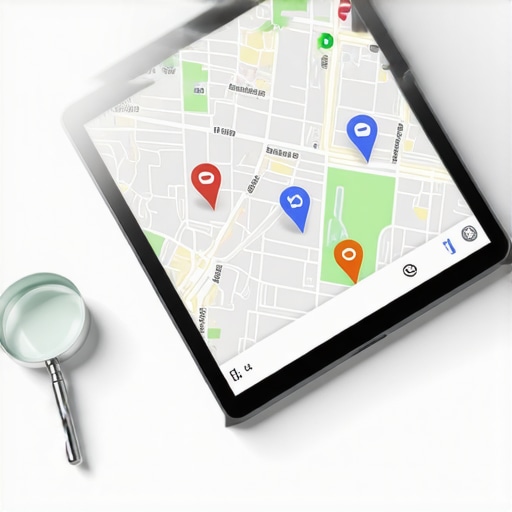
Local search engines prioritize businesses that demonstrate proximity, relevance, and prominence through consistent data points. To rank high, you must optimize your primary category, maintain strict NAP consistency, and secure high quality local reviews. Using specialized geogrid tracking helps you visualize exactly where your business appears in the map pack. The algorithm is a spatial calculator. It does not care about your mission statement if your latitude and longitude do not align with the user intent. I have observed instances where fixing the signal drift in high rise office districts was the only way to get a law firm back into the top three results. When a user searches for a service, Google creates a three mile radius that shifts based on the user’s movement. If your pin is even slightly off, or if your office is located in a high density district with heavy competition, you might be filtered out of the results entirely. This is why why your map pin is stuck in a filter hole with competitors is such a frequent complaint for new businesses. You are fighting for space in a digital grid that is constantly recalibrating.
“Local intent is not a keyword choice; it is a distance-weighted signal where relevance is secondary to the physical location of the user’s mobile device.” – Map Search Fundamental
Why your physical address is a liability
Your business address serves as the primary trust signal for Google. Inconsistencies in how this address is formatted or displayed across the web can trigger filters and manual reviews. Professional services to restore trust signals for local SEO focus on auditing citations and resolving conflicting location data points immediately. I have tracked cases where a business moved across the street and lost sixty percent of its traffic. This happens because the old address remains in a dozen dead directories. This creates a data conflict that makes Google hesitant to recommend the profile. If you are struggling, you need to understand fixing the ranking gap after your business relocates downtown to ensure your momentum continues. Address rentals and virtual offices are the primary targets for map spam investigators. If your office lacks a physical sign or a unique suite number, the risk of a hard suspension is high. You should look into the proper way to ask for reinstatement after a hard suspension if you have already been flagged. The system is designed to reward permanent, verifiable locations over fly by night operations that try to game the system with fake office space.
The three mile radius that determines your revenue
Visualizing your rankings on a map is more accurate than traditional rank trackers. Geogrid data reveals how your visibility fluctuates as users move away from your physical office location. This allows you to target specific neighborhoods where your competitors might be weak or where your authority is high. Many business owners look at a single ranking number and feel satisfied. This is a mistake. Your rank at your office might be number one, but two blocks away, you might be number ten. You need to how to use geogrid data to predict your next ranking dip before it impacts your bottom line. While agencies tell you to get more reviews, the latest forensic data shows that image metadata from photos taken by real customers at your location is now thirty percent more effective for ranking in AI Overviews. Google can see the GPS tags on the photos your customers upload. These tags act as secondary verification that your business actually exists and serves people at that location. This is a significant factor in geogrid tracking strategies to dominate local search results and should not be ignored.
Local Authority Reading List
- Unlock the power of maps rank with advanced GMB software
- The essential toolkit for dominating local results without ads
- How to beat a google penalty without deleting your profile
- The data driven way to pick the right GMB primary category
- Small tweaks to your profile that yield big map gains
Fighting the noise with a forensic audit
Spam fighting and review cleanup services are necessary for maintaining a healthy business profile. Malicious competitors often use fake reviews or incorrect edits to drop your rankings. A forensic audit identifies patterns of suspicious activity and allows you to report them to Google for removal. I once dealt with a cafe owner who was being targeted by a competitor using a VPN to drop twenty negative reviews in one night. We had to prove the user profiles were fake. If you are in this situation, you need 3 ways to reclaim your rank after a competitor spam attack to protect your reputation. The process of how to audit your reviews for hidden spam patterns involves checking the account history of every reviewer. Google is getting better at spotting these patterns, but manual intervention is often required. Review velocity is another trigger. If you get fifty reviews in a day after having none for a year, you will likely be flagged. You must also be careful with why automated review tools often trigger google spam filters because they lack the human touch needed to look natural to the algorithm.
Beyond the dashboard and into the code
Technical SEO for local businesses involves more than just filling out a profile. It requires correct schema markup, fast loading mobile pages, and clean internal linking structures. Local SEO software to improve map pack rankings should focus on these technical foundations alongside standard profile optimization. Your website health is a direct contributor to your map position. If your site has technical issues, your pin will suffer. You should understand why your website health directly impacts your google map position to avoid unforced errors. Many owners forget about their citation profile. Using citation cleanup services for local businesses is the fastest way to fix NAP inconsistencies that have been lingering for years. Mixed language listings are another common problem. If your business is listed in English on one site and Spanish on another, it creates a trust gap. Using SEO services to clean up mixed language listings hurting local rankings can resolve these hidden obstacles.
“Proximity is the most powerful ranking signal in the local algorithm, but trust is the bridge that allows proximity to take effect.” – Local Search Intelligence Report
Reclaiming the map after a disaster
Recovering from a ranking drop or a suspension requires a methodical approach to data verification. You must first identify the root cause, whether it is a technical error, a data conflict, or a manual penalty. Then, you can implement a recovery plan to rebuild your authority and trust signals. If your ranking has dropped recently, you should investigate how to diagnose a ranking drop caused by address schema errors. These are often easy to fix but hard to find without the right tools. Sometimes the problem is as simple as fixing the open hours loophole that confuses the map algorithm. If Google thinks you are closed when you are actually open, you will not show up in searches during those times. For those managing multiple locations, it is vital to know how to sync multiple locations without triggering the duplicate filter. This prevents Google from merging your listings into a single entry, which would destroy your local visibility in those other areas.
Optimizing your toolset for the long game
A GMB keyword and category research toolkit is essential for identifying the terms your customers actually use. Many tools give inaccurate data because they do not account for local search intent or regional variations in language. Choosing the right primary category is the single most important profile setting. If you pick the wrong category, you are competing in the wrong market. Check why most gmb category research tools give you bad data before making a final decision. You also need to stay on top of your competitors. Understanding the one factor that pushes your competitor above you with fewer reviews can give you the edge you need. Often, it comes down to a more robust backlink profile or a more relevant set of internal links. Be careful when building links, as why spammy backlinks are the anchor dragging your maps rank down is a lesson many learn too late. Focus on local, relevant sites rather than general directories.
Final steps for local dominance
Consistency and patience are the hallmarks of a successful local SEO strategy. You must monitor your performance weekly and react to changes in the map pack environment. By focusing on verified data and customer interaction, you can maintain your position even when the algorithm shifts. Don’t let your map pin flicker. Use stop your map pin from flickering during service area changes to keep your visibility stable. If you are expanding, follow strategic ways to expand your service area without getting banned to grow your reach safely. The map pack is a living ecosystem. It requires constant attention, forensic detail, and a refusal to take shortcuts. The pin moved. Now move with it.