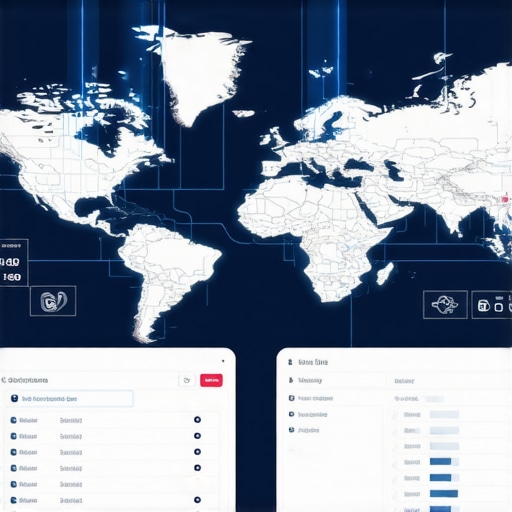
Unlocking the Hidden Potential of Geogrid Tracking for Dominating Local Maps Rankings
In the evolving landscape of local SEO, geogrid tracking emerges as a critical instrument for granular insights and strategic adjustments. Seasoned digital marketers recognize that technical precision in geogrid mapping can significantly influence a business’s visibility in Google Maps and local pack results. This article delves into advanced methodologies for leveraging geogrid tracking tools, optimizing maps rank, and utilizing cutting-edge GMB software to outmaneuver competitors in 2024.
Deciphering the Complexities of Maps Rank Oscillation and the Role of Geogrid Precision
Maps rank fluctuations often stem from subtle shifts in local search algorithms, proximity filters, and AI-driven ranking signals. Geogrid tracking enables practitioners to visualize spatial data and detect anomalies such as ghost pins, fake rankings, or hidden proximity gaps. Implementing sophisticated geostatistical analysis allows for pinpointing exact areas that require targeted optimization, thus ensuring consistent visibility even amidst algorithm volatility.
How can local businesses utilize geogrid data to outperform entrenched competitors in saturated markets?
By integrating geogrid tracking insights with strategic citations, review management, and on-page SEO, enterprises can systematically close proximity gaps and enhance their presence in hyper-local regions. Employing advanced GMB software for real-time monitoring, coupled with geo-location analytics, offers a substantial edge. For detailed tactical frameworks, refer to this guide on geogrid tracking techniques.
Strategies to Identify and Fix Map Visibility Blind Spots in 2024
Reliance on aggregated data without spatial granularity can lead to misleading conclusions about ranking health. Critical to combating this is a multi-layered approach: deploying heatmaps to visualize ranking shifts, performing proximity audits, and assessing AI filter impacts. Advanced GMB toolsets facilitate these assessments, revealing blind spots that, once addressed, can restore lost visibility and prevent ghosting issues.
The Influence of AI Search Filters on Geogrid and Maps Rank
AI advancements in local search algorithms introduce new challenges, notably in identifying pins and ranking signals that AI filters might obscure or distort. Recognizing patterns where AI filters
Harnessing Data-Driven Insights to Outmaneuver Local Competitors
Effective geogrid tracking transforms raw spatial data into actionable strategies, empowering local businesses to gain a competitive edge in Google Maps rankings. By analyzing heatmaps, proximity patterns, and AI filter impacts, digital marketers can craft targeted optimization plans that address specific gaps in visibility. Integrating these insights with meticulous review management and citation strategies enhances overall local SEO performance, ensuring your business stays ahead in saturated markets. For practical techniques, explore this comprehensive guide on geogrid tracking strategies.
Maximize Spatial Data Precision to Outmaneuver Local Competition
Leveraging high-resolution geospatial data is essential for granular insights into local map performance. By integrating multi-layered geospatial datasets with machine learning algorithms, businesses can predict shifts in rankings before they occur, enabling proactive optimization strategies. This entails combining raw geolocation signals with demographic overlays for a sophisticated understanding of how various factors influence map visibility, especially in densely populated markets.
Overcoming Algorithmic Noise Through Advanced Data Cleansing Techniques
Maps ranking can be distorted by data anomalies such as duplicate listings, phantom pins, or erroneous proximity signals. Employing robust data cleansing protocols—including spatial filtering, outlier detection, and anomaly scoring—reduces noise and enhances the fidelity of geogrid insights. This rigor allows SEO professionals to focus on true signals rather than misleading fluctuations, resulting in more consistent and reliable rank assessments.
How can businesses harness AI-powered geospatial analytics to predict and influence map rankings?
AI integration facilitates not just real-time monitoring but also predictive modeling based on historical spatial behavior. By training neural networks with extensive geospatial datasets, companies can forecast rank fluctuations and identify emerging opportunities. For instance, AI-driven heatmaps can flag underserved neighborhoods or detect proximity gaps that, if addressed promptly, could lead to substantial gains in local visibility. To explore this further, delve into this in-depth resource on AI-powered geospatial analytics.
Synergizing Geogrid Insights with GMB Optimization for a Competitor-Resilient Presence
While geogrid tracking reveals where rankings falter, aligning these insights with targeted Google My Business (GMB) enhancements ensures comprehensive dominance. Strategies include precise NAP consistency, optimizing location-specific categories, and enriching GMB listings with localized keywords based on geospatial data. Moreover, integrating customer review signals and Q&A insights from specific zones detected via geogrid analysis can boost relevance scores, creating a robust shield against competitors aiming for the same local prominence.
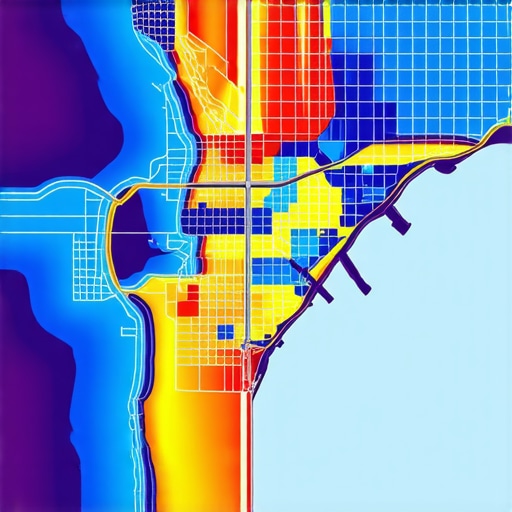
Illustration showing a layered heatmap overlaying city districts with geospatial data points, highlighting ranking fluctuations and areas for targeted optimization.
**Enhanced geospatial intelligence is the backbone of futuristic local SEO strategies. By mastering these advanced techniques, you equip your business with the agility and precision needed to thrive in dynamic local markets. Ready to take your geogrid tracking to the next level? Engage with our experts or explore specialized tools that turn spatial data into actionable dominance.
Mastering Spatial Granularity for Unparalleled Map Visibility
High-resolution geospatial data can be the differentiator between top-ranked local listings and obscurity. Integrating multi-layer spatial overlays with machine learning models allows for preemptive adjustments ahead of ranking shifts, particularly in dense urban environments where proximity nuances dictate visibility.
Artificial Intelligence Shapes the Future of Map Optimization
AI-powered geospatial analytics extend beyond mere monitoring; they predict future ranking oscillations by analyzing complex spatial behaviors. Neural networks trained on extensive datasets can identify latent opportunities, such as underserved neighborhood clusters, and recommend proactive optimization strategies that keep your business ahead of the curve.
What sophisticated methods can practitioners employ to leverage AI for predictive local ranking insights?
By deploying deep learning architectures like convolutional neural networks (CNNs) trained on historical geospatial and engagement data, professionals can forecast ranking fluctuations and detect emerging map clusters. Incorporating unsupervised learning techniques for anomaly detection aids in distinguishing genuine ranking signals from noise. For comprehensive methodologies, see this authoritative resource on AI-driven geospatial insights.
Refining Data Integrity to Combat Algorithmic Noise Effectively
Addressing data anomalies—such as phantom listings or inconsistent proximity metrics—is vital for accurate geogrid analysis. Sophisticated data cleansing techniques, including spatial outlier detection and anomaly scoring algorithms, help isolate true ranking signals. This rigorous approach enhances the reliability of insights and minimizes the impact of algorithmic noise on strategic decisions.
Harnessing Symbiotic Relationship Between Geographics and Content Themes
Aligning geospatial insights with contextual content optimization—such as hyper-local keywords, zone-specific testimonials, and zone-relevant offers—amplifies relevance. This symbiosis ensures your listings resonate with both search algorithms and local audiences, driving organic engagement and fostering community trust.
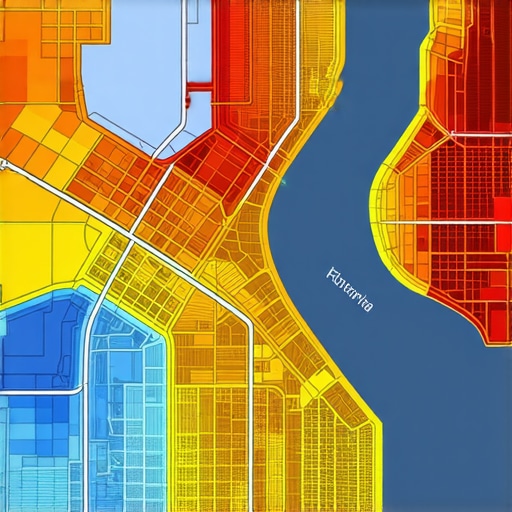
Detailed map overlay illustrating geospatial clusters with ranking intensity indicators, highlighting optimization hotspots.
Expert Insights & Advanced Considerations
Prioritize Spatial Data Accuracy to Predict Ranking Movements
Leveraging high-precision geospatial data allows for proactive adjustments, reducing the impact of unforeseen fluctuations in maps rankings and maintaining a competitive edge.
Integrate AI to Uncover Hidden Opportunities
Employing deep learning models on geospatial and engagement datasets can forecast ranking shifts and reveal underserved areas, enabling strategic targeting before competitors react.
Focus on Data Cleansing to Eliminate Noise
Rigorous cleansing protocols mark the difference between reliable insights and misleading signals, ensuring your optimization efforts are always based on trustworthy data.
Align Geospatial and Content Strategies for Maximum Impact
Synchronizing location insights with localized content amplifies relevance, boosting visibility and engagement within targeted zones.
Curated Expert Resources
- Google’s Official Local Search Quality Guidelines: Fundamental for understanding ranking factors and algorithm nuances at a granular level.
- Geospatial Analytics with ArcGIS or QGIS: Advanced tools that facilitate spatial analysis, heatmap creation, and visualization of ranking dynamics in local markets.
- Neural Network Frameworks like TensorFlow or PyTorch: Platforms for developing predictive models tailored to geospatial and SEO data.
- Case Studies from Leading Local SEO Agencies: Practical applications and proven strategies to refine your approach based on real-world results.
Final Reflection from an Expert Perspective
Achieving dominance in local maps rankings hinges on your ability to harness detailed geogrid tracking combined with AI-driven insights and rigorous data validation. Mastery of these technical layers transforms your approach from reactive to proactively strategic, making your business more resilient amidst algorithm shifts. Want to elevate your local SEO game? Connect with our specialists or explore cutting-edge tools that convert spatial intelligence into operational advantage.