
The Evolution of Local SEO: Why Geogrid Tracking Has Become a Game-Changer
In the competitive landscape of local search optimization, businesses must leverage innovative tools to attain and sustain top rankings on Google Maps. The integration of GMB software with advanced geogrid tracking techniques has revolutionized how local entities approach maps rank enhancement. This synergy fosters a data-driven environment where precise location analytics directly translate into improved visibility, customer engagement, and revenue growth.
Deciphering the Mechanics of Geogrid in Elevating Maps Rankings
At its core, geogrid tracking involves segmenting target areas into a detailed grid, allowing for granular analysis of map performance metrics. This methodology uncovers spatial performance disparities and pinpoints areas requiring tactical amplification. Consequently, business owners can deploy calibrated GMB software adjustments, ensuring their brick-and-mortar locations dominate local search results with strategic precision.
Why Does Geogrid Outshine Conventional Tracking Approaches?
Traditional tracking methods often rely on broad keyword ranking reports, which lack spatial specificity. In contrast, geogrid facilitates a localized focus, offering insights into how your Google My Business (GMB) listing performs across different micro-areas within a city. This nuanced approach aligns with the latest SEO best practices, emphasizing contextual relevance and jam-packed with actionable intelligence. Studies from Search Engine Land highlight the importance of geographic precision in improving local search outcomes.
Can Geogrid Tracking Address the Complexity of Multi-Location Management?
Managing multi-location enterprises demands a sophisticated understanding of regional variability and competitive landscapes. Geogrid tracking empowers marketers to tailor localized strategies that account for unique demographic behaviors and competitive pressures in distinct neighborhoods. By integrating these insights into your GMB software, businesses can systematically optimize each outlet’s presence, thereby catalyzing overall brand visibility.
What Advanced Techniques Ensure Optimal Implementation of Geogrid in Maps Rank Optimization?
Achieving peak performance with geogrid requires meticulous planning, including the deployment of custom tracking zones congruent with client-specific service areas, and utilizing heatmaps to visualize performance spikes. Additionally, embedding localized keyword signals, integrating customer review data, and employing proximity-based ranking signals amplify geogrid’s effectiveness. Experts suggest regular recalibration of grids based on evolving map dynamics, ensuring sustained dominance in local search results.
To deepen your understanding, exploring dedicated resources like Mastering Geogrid Tracking Strategies can be invaluable. If you possess insights or emerging techniques, sharing these with the community enriches collective expertise and accelerates innovation in local SEO.
To truly leverage geogrid tracking for exceptional maps rank results, marketers must go beyond basic grid segmentation and incorporate adaptive layering techniques. This approach involves overlaying demographic, infrastructural, and behavioral data onto your spatial grids, creating a multi-faceted map of local search potential. Such layered analysis enables you to identify unseen opportunities and blind spots, transforming raw geospatial data into a comprehensive tactical blueprint.
Why Is Cross-Referencing Geogrid Data with External Indicators Crucial?
Aligning geogrid insights with external data sources—such as regional economic indicators, foot traffic analytics, and competitive activity reports—amplifies precision. For instance, integrating data from platforms like geogrid tracking tools equipped with location-based analytics can reveal nuanced patterns, allowing for hyper-targeted optimization efforts. This rigorous cross-referencing pushes your local SEO from reactive to predictive, positioning your business ahead of emerging trends.
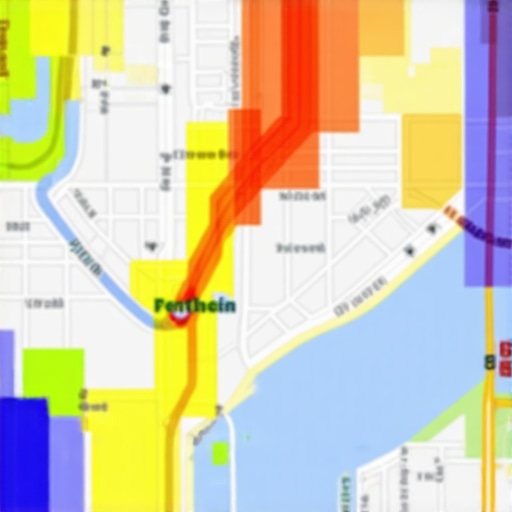
Conventional wisdom suggests that increasing spatial granularity directly correlates with better rankings. However, this isn’t always the case. Excessive segmentation can lead to data noise, diluting actionable insights. Experts recommend balancing grid resolution with data stability, ensuring your analysis remains both detailed and reliable. Ongoing calibration—supported by evolving map optimization techniques—is vital for sustained success.
Are there universally applicable principles that transcend niche-specific geogrid strategies?
While strategies vary across industries, some core principles hold true: prioritize hyper-local relevance, maintain dynamic data integration, and ensure consistent recalibration of your geogrid layers. Staying updated with authoritative insights such as those from leading authorities can significantly enhance your strategic framework. Engaging with expert communities and shared case studies accelerates learning and helps tailor approaches to your unique market conditions.
For those eager to refine their tactics further, exploring advanced map rank strategies provides practical, field-tested methods to elevate your local visibility effectively. Sharing your findings or questions with the community fosters collective growth in mastering geogrid-driven local SEO.
Implementing Adaptive Layering for Superior Local Visibility
For seasoned marketers aiming to push beyond basic geogrid application, adopting an adaptive layering approach transforms static spatial analysis into a dynamic operational blueprint. By integrating demographic overlays—such as age, income levels, and lifestyle preferences—alongside infrastructural data like transportation hubs and retail corridors, businesses can craft hyper-targeted strategies that resonate with specific local audiences. This multidimensional mapping enables real-time adjustments, ensuring your GMB optimization remains responsive to fluctuating market conditions and consumer behaviors, fostering sustained dominance in local search landscapes.
What role does real-time data integration play in refining geogrid strategies?
Integrating live data feeds—such as foot traffic analytics, temporal activity spikes, and social media check-ins—into your geospatial grids offers unprecedented insight. Platforms like RealTimeLocationInsights provide APIs that allow for continuous updates, enabling marketers to pivot tactics swiftly, capitalize on emerging trends, and prevent complacency. The capacity to adapt your local SEO map instantaneously ensures resilience against competitive fluctuations and enhances overall visibility, especially during peak shopping periods or seasonal campaigns.
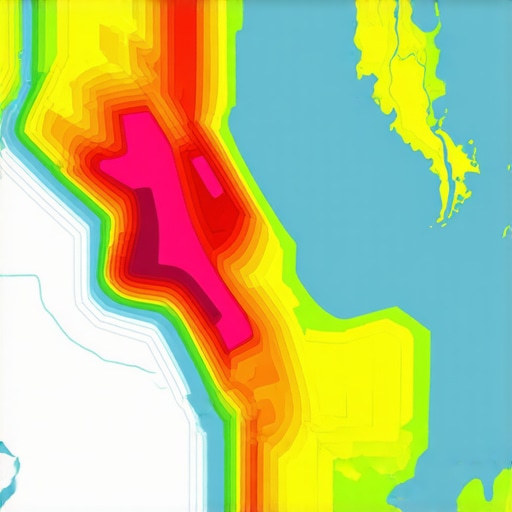
While fine-tuning your geogrid layers promises detailed insights, over-segmentation risks creating data noise—leading to misleading conclusions and misallocated resources. To strike the optimal balance, employing statistical smoothing techniques, such as spatial autocorrelation analyses and data aggregation models, stabilizes findings without sacrificing relevance. Tools like Spatial Stats Analyzer facilitate this calibration, helping marketers define the precise resolution that maximizes actionable intelligence while maintaining analytical integrity.
Does increasing spatial resolution universally improve local SEO outcomes?
Experts contend that increasing resolution is beneficial only up to a point. Beyond a certain threshold, additional granular data may obscure broader regional patterns necessary for strategic positioning. The key lies in customizing grid size relative to market size, population density, and business objectives. Continuous validation through A/B testing and performance tracking ensures your geogrid calibration remains aligned with real-world results, preventing diminishing returns and optimizing resource allocation.
Unlocking the Synergy Between Data Science and Geogrid Precision
Integrating sophisticated data science methodologies with geogrid mapping elevates local SEO to unprecedented levels of accuracy and effectiveness. Employing advanced spatial analytics—such as kernel density estimation and predictive modeling—allows marketers to forecast map performance trends, identify latent opportunities, and preemptively address potential ranking declines. This data-centric approach ensures that geogrid segments are not merely static grids but dynamic frameworks adaptable to real-time market shifts, solidifying a brand’s dominance in hyper-local contexts. For a comprehensive understanding, consult expert analyses from Spatial Analytics Journal that explore the intersection of AI-driven spatial data and SEO enhancement.
How Can Hyper-Localized Content Drive Geogrid Optimization?
Creating hyper-localized content tailored to specific micro-areas within your geogrid can significantly amplify your local search visibility. Utilizing insights from geographic profiling, businesses can craft narratives that resonate with neighborhood identities, cultural nuances, and community interests. Content strategies informed by geogrid data—such as localized blog posts, community event participation, and targeted offers—foster authentic engagement and boost relevance signals to search engines. This nuanced approach transforms passively segmented data into active, community-driven content ecosystems that elevate rankings. To implement this effectively, leverage tools like Local Content Genius for strategic content planning rooted in spatial insights.

In urban landscapes, mobility patterns—encompassing transit routes, pedestrian flows, and vehicular traffic—can dramatically influence local consumer behavior. Sophisticated geogrid overlays integrated with live transportation data empower marketers to adapt their local SEO strategies dynamically. For instance, adjusting GMB posts or promotional outreach based on rush hours or event-based foot traffic can transiently boost visibility in high-density zones. Technologies like Mobility Data Hub offer APIs that feed real-time transportation analytics into your geospatial models, enabling hyper-responsive marketing moves that capitalize on environmental variables. Exploring these integrations can unlock a competitive edge in densely populated markets.
Is Over-Segmenting the Market Limiting Your Local Search Gains?
While finer geospatial segmentation promises detailed insights, excessive division risks fragmenting your data to the point of diminishing returns. Over-segmentation may lead to scarce data points per grid, resulting in unstable rankings and skewed decision-making. Striking an optimal balance involves employing statistical clustering techniques—such as density-based spatial clustering—to identify core performance clusters and avoid unnecessary micro-segmentation. Regular validation through performance analytics ensures your geogrid resolution remains aligned with real-world outcomes, maximizing both insights and resource efficiency. Resources like Geospatial Optimization Strategies provide frameworks for achieving this balance effectively.
Are there cross-industry practices that can harmonize local SEO efforts across diverse markets?
Indeed, principles like scalable data architecture, continuous feedback loops, and context-aware content creation transcend individual niches. For example, retail, healthcare, and service industries all benefit from adaptive geospatial models that incorporate demographic overlays, behavioral data, and infrastructural insights. By studying case studies from authoritative sources such as Industry Leaders SEO IQ, marketers can identify universal tactics like layered data analysis and iterative strategy refinement. Sharing insights and outcomes within professional communities accelerates sector-wide advancements and fosters innovation in localized search methodology.
Embracing Predictive Analytics for Future-Ready Maps Optimization
Moving beyond reactive strategies, predictive analytics harness machine learning algorithms to forecast map performance fluctuations and customer movement trends. Implementing these tools within your geogrid framework enables proactive adjustments, ensuring the sustained vitality of your local search rankings. For example, models can predict seasonal traffic patterns, allowing preemptive content deployment or GMB updates aligned with upcoming peaks. Platforms like Predictive Mapper facilitate such integrations, empowering businesses to stay ahead of the curve. This paradigm shift from reactive to anticipatory strategies demands a robust data foundation but offers a formidable advantage in competitive local markets.
Why Continual Recalibration Is the Key to Long-Term Success
As map dynamics and consumer behaviors evolve, static geogrid models risk obsolescence. Continual recalibration—integrating fresh data streams, adjusting grid resolutions, and refining analytical algorithms—is essential for maintaining a competitive edge. Employing a cyclical review process that incorporates local market changes, technological advancements, and search engine algorithm updates helps sustain high rankings. Tools such as Map Analysis Pro support these ongoing optimization efforts, transforming static strategies into agile, future-proof frameworks. Emphasizing adaptability and iterative learning ensures your local SEO remains resilient amid evolving landscapes.
Challenging the Norms of Local SEO Strategy
In the ever-evolving landscape of local search optimization, seasoned marketers recognize that conventional approaches often fall short of delivering sustainable results. Harnessing innovative tools like GMB software integrated with advanced geogrid tracking techniques can redefine your local visibility. These sophisticated strategies enable a granular understanding of spatial performance, empowering businesses to target micro-areas with pinpoint accuracy, surpassing the limitations of broad keyword tactics.
The Subtle Power of Deep Spatial Analytics
Deep spatial analysis translates raw geographical data into actionable insights. By dissecting performance patterns within meticulously crafted geogrids, marketers can uncover hidden opportunities—whether it’s a neglected neighborhood or a high-potential micro-location. Embracing such data-driven approaches leads to strategic interventions that elevate maps rank and foster long-term dominance in local search results.
Why Tinkering with Details Will Pay Off
Refining geogrid segmentation isn’t about complexity for complexity’s sake; it’s about enhancing precision. Expert practitioners advise balancing grid resolution with data reliability, avoiding the trap of over-segmentation that results in noisy or unstable metrics. Incorporating layered data—demographics, infrastructure, traffic flows—into your geospatial model creates a multi-dimensional view, unlocking opportunities that generic tactics overlook. This holistic view transforms static local SEO strategies into dynamic, adaptable systems capable of weathering market shifts.
Real-Time Adjustment: Staying Ahead of the Curve
The incorporation of real-time data streams, such as live foot traffic or transportation analytics, enables marketers to calibrate their geogrid models proactively. With these insights, promotional activities—like posting, review solicitation, or offer deployment—can be synchronized with actual consumer movement patterns, maximizing impact. Leveraging APIs from platforms like Mobility Data Hub allows for swift responses to environmental changes, giving your local SEO efforts an edge over less agile competitors.
The Art of Balancing Detail and Clarity
While it might seem intuitive that more segmentation yields better results, excessive micro-targeting risks diluting insights. Striking the right balance involves employing statistical smoothing and aggregation techniques to ensure data stability. This disciplined calibration prevents misallocations of resources while preserving the nuanced understanding required for authentic local engagement. Periodic review and performance validation keep your geospatial approach finely tuned, ensuring your maps rank remains resilient and responsive.
Harnessing Data Science to Visualize and Predict
The intersection of data science and geospatial analysis opens new frontiers for local SEO. By applying predictive modeling and heatmap visualization, savvy marketers can anticipate map performance trends, identify emerging hotspots, and allocate resources proactively. Integrating advanced spatial analytics tools—such as Spatial Analytics Journal—enhances your capacity to stay at the forefront of local search dynamics, transforming reactive tactics into strategic, long-term plans.
Optimizing Content for Micro-Locales
Content tailored to specific geospatial segments enhances relevance and engagement. Utilizing insights from geogrid data enables the creation of hyper-local narratives that resonate with community identities, cultural nuances, and neighborhood interests. Such localized content fosters authentic connections and signals search engines about your proximity and relevance, boosting your maps rank. Tools like Local Content Genuis streamline this process, ensuring your content strategies are rooted in spatial intelligence.
Integrating Mobility Patterns Into Your Strategy
Urban landscapes are dynamic ecosystems of transit and pedestrian movement. Incorporating mobility data through APIs like Mobility Data Hub allows your SEO tactics to adapt to environmental shifts—rushing commuters during rush hours or pedestrian influx during events—amplifying the effectiveness of GMB updates and promotional campaigns. This agility ensures your business remains visible and relevant at the right moments and places, turning micro-movements into macro opportunities.
Is More Granularity Always Better? The Reality Check
Despite the allure of hyper-specific targeting, over-segmenting can fragment data pools, creating noise that hampers clarity and decision-making. Balance comes from applying spatial clustering and performance grouping methods, which unify data points into meaningful clusters. Regular validation of geogrid resolution against real-world outcomes ensures your efforts stay aligned with tangible results, preserving both depth and stability in your local SEO efforts.
Bringing It All Together for Future-Ready Local SEO
The future of local SEO hinges on integrating sophisticated geogrid tracking with predictive analytics, layered data, and real-time responsiveness. This comprehensive approach equips businesses to navigate the complexities of modern consumer behaviors and environmental variables, securing a commanding maps rank. Exploring these advanced strategies requires commitment but offers exponential returns, elevating your local presence from reactive to proactive. Engage with industry-leading resources like GMB software insights and stay ahead in this competitive arena. Your next move could redefine your neighborhood’s digital landscape—are you ready to lead?
![How to Fix Your Map Rank When AI Overviews Hide the 3-Pack [2026]](https://geogridranker.com/wp-content/uploads/2026/04/How-to-Fix-Your-Map-Rank-When-AI-Overviews-Hide-the-3-Pack-2026-1.jpeg)
![How to Fix Your Map Rank When AI Overviews Hide the 3-Pack [2026]](https://geogridranker.com/wp-content/uploads/2026/04/How-to-Fix-Your-Map-Rank-When-AI-Overviews-Hide-the-3-Pack-2026.jpeg)

Rebecca Carter
This post provides a comprehensive overview of how geogrid tracking is transforming local SEO strategies in 2024. I’ve been experimenting with layered geospatial data in my markets, and the impact on precision targeting is undeniable. The ability to visualize performance disparities across micro-areas allows for far more strategic resource allocation, especially for multi-location brands. One challenge I’ve encountered is calibrating the right grid resolution — too granular can lead to data noise, but too broad might miss opportunities. Regular validation and using tools like Spatial Stats Analyzer really help. I’m curious, how do others balance the need for detailed insights with data stability? Are there particular techniques or tools that have worked well for you in maintaining this balance effectively?