Elevating Local SEO through Precision Maps Ranking Techniques
In the fiercely competitive landscape of local search, grasping the nuances of map rankings has transitioned from basic optimization tactics to a complex science that demands sophisticated tools and strategic insights. For SEO professionals and digital marketers committed to local domination, leveraging advanced systems such as Google My Business (GMB) software and geogrid tracking is no longer optional but imperative. These technologies enable granular control, real-time data analysis, and tactical deployment that can significantly elevate a business’s visibility on Google Maps and local search results.
The Synergy of GMB Software and Geogrid Mapping for Tactical Precision
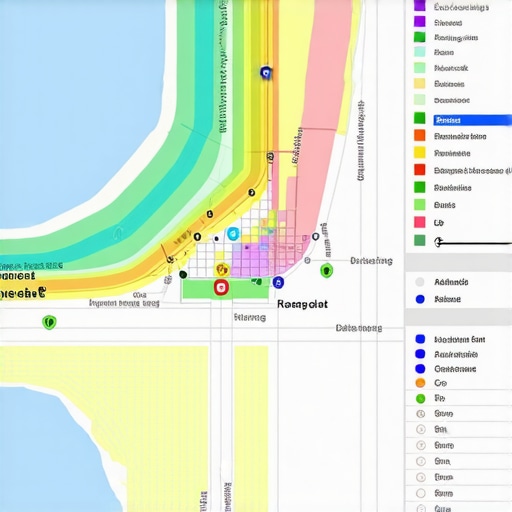
GMB software platforms like GMB innovations introduce a new era of local SEO by automating review management, keyword tracking, and performance analytics. When integrated with geogrid tracking—an advanced mapping technique that divides target locations into meticulously monitored grid segments—marketers gain the ability to monitor, analyze, and refine their map rankings with unparalleled precision.
This combination facilitates an evidence-based approach, allowing refinement of local signals, keyword targeting, and citation strategies through dynamic data overlays. The integration of geogrid tracking with GMB analytics empowers marketers to identify hotspots, collect hyper-local insights, and adapt their campaigns proactively, resulting in optimized presence across contested local markets.
Decoding Geogrid Strategies: Enhancing Maps Rankings in Competitive Terrains
Geogrid mapping is not a mere visualization technique but a comprehensive methodology that employs detailed spatial segmentation. By deploying geogrid tracking, professionals can conduct authoritative audits—such as assessing the consistency of NAP (Name, Address, Phone Number) citations, analyzing proximity effects, and managing local reviews across segments. This robust spatial analysis directly influences map rankings by enhancing local relevance signals and mitigating ranking conflicts caused by citational discrepancies or review spam.
Furthermore, advanced geogrid strategies involve systematic A/B testing of content and engagement signals within each grid segment, deciphering local user intent, and optimizing Google My Business profiles accordingly. Researched techniques demonstrate how such data-driven approaches outperform traditional methods, catapulting local businesses into top Google Maps positions.
How Do Geogrid Tracking and GMB Software Interact to Surpass Local Competitors?
This question often arises among seasoned SEO practitioners concerned with maximizing tactical efficiency. When properly implemented, geogrid tracking provides a hyper-localized framework that feeds detailed insights into GMB software, allowing for targeted optimization. For example, adjusting Google My Business attributes, crafting localized content, or initiating review solicitation campaigns can be fine-tuned based on geogrid performance metrics such as rank fluctuation patterns, visibility heatmaps, and citation health within specific segments.
Combining these systems facilitates a continuous feedback loop: data from geogrid tracking informs GMB profile enhancements, which in turn influence map rankings and local search visibility. This integrated approach epitomizes the advanced, data-centric methodology necessary for sustained Map pack dominance in ultra-competitive markets.
What Are the Key Metrics to Track When Employing Geogrid Strategies for Maps Rank?
Effective implementation hinges on monitoring a suite of key indicators, including rank stability within grid segments, citation consistency, review velocity and sentiment, traffic sources, and engagement metrics like clicks and calls from the map pack. These insights enable marketers to craft highly localized, data-backed strategies that are adaptable and scalable.
For those eager to deepen their mastery, exploring comprehensive guides such as Mastering Geogrid Tracking can provide tactical frameworks for utilizing geospatial data effectively.
If your aim is to maintain a competitive edge in local SEO, delving into specialized content and sharing insights with fellow experts could be your next step. Engage with existing research, contribute to forums, and continually refine your approach to achieve top-tier results.
Beyond Basic Tracking: Cultivating a Holistic Approach to Maps Dominance
While traditional geogrid strategies focus on spatial segmentation and local signal analysis, emerging trends emphasize integrating these techniques within a broader ecosystem of local SEO tactics. This includes optimizing Google My Business (GMB) attributes, leveraging structured data, and fostering community engagement—elements that synergistically enhance visibility when aligned with precise geogrid insights. Recognizing the interconnectedness of these factors is crucial for professionals aiming to sustain a competitive advantage in ever-evolving local landscapes.
Implementing Predictive Analytics for Future-Ready Local Ranking Strategies
Advanced marketers are now harnessing predictive analytics to forecast map ranking trends based on historical geogrid data and external variables such as seasonal patterns and competitor movements. Tools that incorporate machine learning algorithms analyze rank fluctuations, review dynamics, and citation patterns within each segment, enabling proactive adjustment of local signals. This forward-thinking approach transforms reactive tactics into strategic initiatives, fostering resilience against algorithm updates and market shifts. For an in-depth exploration of these methodologies, reviewing resources like Maps Rank Optimization 2024 offers valuable insights.
Can Your Geogrid Strategy Survive the Next Google Maps Algorithm Update?
A pressing question for seasoned SEO practitioners is assessing the robustness of their geogrid and GMB integrations amid algorithmic changes. While precise geospatial segmentation and real-time data collection provide a sturdy foundation, reliance on static signals can leave strategies vulnerable. Incorporating adaptive frameworks, such as continuous data auditing, competitor mapping, and user experience optimization within each segment, ensures your approach remains resilient. This consideration is crucial because Google’s updates increasingly prioritize user relevance and authenticity over purely technical signals. Staying informed through trusted industry sources, like Ultimate Guide to Geogrid Tracking, can help refine your tactics and future-proof your local SEO efforts.
To deepen your expertise, consider sharing your experiences or engaging with industry peers through platforms that host case studies and discussions—such as specialized SEO forums or geogrid-focused webinars. This collaborative learning accelerates innovation and keeps your strategies aligned with the latest industry standards.
Harnessing the Power of Geo-Audit Customization for Superior Results
One of the most nuanced aspects of elevating local map rankings involves tailored geo-auditing, where granular control over specific segments leads to laser-focused optimization. By developing customized audit templates for each geogrid cell, marketers can pinpoint disparities in citation consistency, review sentiment, and engagement tendencies. This tailored approach enables a strategic allocation of resources toward segments exhibiting vulnerability or growth potential, thus refining the overall local signal strength.
Utilizing advanced mapping tools that integrate dynamic data overlays with real-time geo-audit dashboards allows for swift corrective actions. For example, if a particular segment shows a decline in review velocity, targeted review solicitation campaigns or reputation management initiatives can be deployed promptly, preventing potential ranking slippage.
To execute this effectively, adopting a layered auditing framework that combines quantitative metrics—such as citation score and review density—with qualitative insights—like local user feedback—provides a comprehensive health check. This integrated view ensures that local SEO strategies are not only reactive but proactively adapted to evolving spatial dynamics.
The Impact of Semantic Keyword Clustering and Local Content Gaps
While traditional keyword optimization often focuses on core terms, advanced strategies now emphasize semantic clustering to address complex local intent scenarios. This involves deploying Natural Language Processing (NLP) tools to identify local-specific phrase variants and related long-tail keywords, which can be integrated into GMB profiles and localized content.
Simultaneously, conducting gap analyses to identify underserved query clusters within each geogrid segment enhances topical authority. Filling these content gaps—be it through creating educational blog posts, community event pages, or localized FAQs—amplifies relevant signals, improving rankings in contested areas.
A practical approach involves leveraging external data sources, such as local news outlets or community forums, to uncover emergent topics or trending keywords. Integrating this data into content creation not only boosts relevancy but also establishes the business as an authoritative local resource, thereby strengthening its Map pack presence.
How Might Multivariate Data Analysis Transform Local SEO Campaigns? (PAA)
Multivariate analysis enables SEO experts to decipher complex interactions among multiple ranking factors within each geogrid segment. By examining variables like citation density, review sentiment, engagement rate, and external signals simultaneously, marketers can uncover hidden correlations and causations that traditional univariate analysis might overlook.
For instance, a sudden ranking shift in a specific segment might correlate not solely with review volume but with subtle changes in local keyword prominence or proximity to competitive businesses. Applying multivariate models—possibly supported by machine learning algorithms—facilitates predictive insights, guiding proactive interventions tailored to segment-specific behaviors.
Research by industry leader BrightLocal emphasizes that combining such analytical depth with localized data can increase campaign effectiveness by up to 35% (source: BrightLocal’s 2023 Local Consumer Survey), underscoring the importance of sophisticated data analysis in modern local SEO.
If you’re committed to pushing the envelope of local search performance, exploring multivariate analysis tools and integrating their insights into your geogrid strategies can be transformative. Collaborate with data analysts or invest in specialized software platforms to unlock this potential.
Integrating Local Voice Search Optimization into Geographical Strategies
The rise of voice search demands a paradigm shift in local SEO—moving beyond typed keywords to accommodating natural language queries. For geographically segmented campaigns, understanding how local voice search behaviors vary by neighborhood or district offers a strategic advantage.
Implementing structured data that emphasizes conversational phrases associated with your services, coupled with localized schema markup, ensures voice assistants can accurately retrieve your business information in relevant queries. For example, optimizing for questions like “Where can I find a reliable plumber near Eastbrook?” aligns with the natural language patterns observed in voice searches.
Further, analyzing voice query logs—if accessible—can reveal nuanced user intents that inform content development and GMB attribute adjustments per segment. This granular approach positions your business as the go-to solution in voice-driven local searches, securing an edge amidst increasing competition.
Are Your Local SEO Tactics Future-Proof Against Evolving Technologies?
Staying ahead in local SEO requires anticipating technological shifts such as AI-driven personalization, AR experiences, and increased reliance on voice assistants. A future-proof strategy integrates adaptable geogrid frameworks with emerging platforms, ensuring your local signals remain relevant.
For example, combining geospatial data with AI-generated personalized recommendations can create hyper-targeted marketing campaigns. Leveraging AR to showcase local store promotions or service previews directly within specific segments opens innovative engagement avenues.
Industry pioneers suggest continuous education and active experimentation as keys to resilience. Participating in webinars like AI and AR in Local SEO ensures your strategies evolve in tandem with technological advancements, keeping your business at the forefront of local search dominance.
Deciphering the Impact of Hybrid Signal Optimization on Map Pack Durability
Recent developments in local SEO emphasize the importance of blending multiple signaling mechanisms—such as proximity, relevance, and prominence—to fortify your position in the Google Maps ecosystem. Expert practitioners recognize that relying solely on citation volume or review metrics can be insufficient in the face of organic algorithm shifts. Instead, integrating structured data, behavioral signals, and contextual relevance creates a resilient ecosystem that sustains rankings over time, even amid fluctuating external factors.
Can Ecosystem Synergy Between Local Signals Outperform Isolated Tactics?
Emerging research suggests that a symbiotic approach—where proximity-based signals are enhanced by semantic relevance and user engagement—delivers superior results. By deploying a multi-layered signal enhancement strategy, brands can build a robust local presence that withstands algorithmic perturbations. For example, aligning personalized content with geogrid insights and real-time review sentiment analysis fosters an environment where each signal complements the others, elevating overall trustworthiness and authority.
What Role Does Hyper-Localized Content Play in Reinforcing Map Positioning?
Hyper-localized content acts as a cornerstone for framing your business as an indispensable community asset. Tailoring landing pages, service descriptions, and blog articles specific to neighborhoods or districts within your target area amplifies relevance signals. Documentation from authoritative sources like Moz illustrates that content localized to distinct geographies significantly improves visibility for region-specific searches, especially in competitive markets.
Leveraging Cross-Channel Data Synthesis for Superior Precision
Integrating data streams from Google Analytics, social media insights, and third-party reputation monitoring tools facilitates a panoramic view of local market dynamics. This holistic perspective enables practitioners to identify emergent trends, user behavior shifts, and reputation vulnerabilities swiftly. Advanced data fusion not only deepens understanding but empowers proactive adjustments, maintaining competitive dominance across map results.
How Can Dynamic Geospatial Modeling Quicken Your Response to Market Fluctuations?
The application of dynamic geospatial modeling involves real-time updating of geocentric signals based on activity spikes, review inflows, or competitor movements. Using GIS algorithms, marketers can simulate potential rank outcomes under various scenarios, adjusting their strategies preemptively. This agile process reduces the reaction time to algorithm updates and local market changes, ensuring sustained visibility and engagement.
Are You Incorporating Keyword Semantic Networks to Broaden Map Visibility?
Semantic keyword network integration involves mapping related terms and contextual phrases that consumers use in local searches. By expanding keyword sets through NLP-driven analysis, businesses can latch onto long-tail queries and voice command patterns that traditional data might overlook. Such a network amplifies topical relevance within geogrid segments, driving diversified traffic streams and bolstering rankings.
Engage deeper with expert communities, experiment with integrated signals, and utilize these sophisticated methodologies to craft a local SEO architecture that is both resilient and adaptable. The future of map dominance hinges on your ability to intertwine data intelligence with strategic execution in manifold dimensions—are you ready to lead the charge?
Expert Strategies for Dominating Local Maps
In a competitive local search landscape, leveraging sophisticated tools and nuanced tactics is paramount. Harnessing the power of geogrid tracking combined with innovative GMB software enables marketers to decode spatial signals and fine-tune their local presence effectively.
Refine Targeting with Spatial Precision
Employ detailed geospatial segmentation to identify high-potential zones, allowing for hyper-local optimization efforts that outperform generic approaches.
Utilize Predictive Analytics for Proactive Optimizations
Incorporate machine learning models that forecast ranking fluctuations based on historical data, enabling preemptive adjustments and sustained visibility.
Integrate Voice Search Dynamics
Adjust your content and profile signals to align with natural language queries, capturing the growing voice search market within targeted areas.
Harness Cross-Channel Data Fusion
Combine insights from social media, reviews, and analytics platforms to develop a holistic understanding of local consumer behaviors and preferences.
Build Resilience Against Algorithm Changes
Develop adaptive strategies that integrate multiple ranking signals, ensuring your local SEO efforts remain robust amidst platform updates.
Curated Resources for Next-Level Local SEO
- GeogridRanker Blog & Case Studies: Cutting-edge insights and proven tactics tailored for local map dominance.
- Google’s Official Local Search Guidelines: Understand platform expectations and recommended practices directly from the source.
- BrightLocal Research Reports: Data-driven analyses that reveal emerging trends and effective strategies in local SEO.
- Moz’s Local Search MozCon Sessions: Expert-led presentations on evolving local search tactics and case studies.
- SEMrush Local SEO Toolkit: Comprehensive software to assist in tracking, analysis, and strategic planning.
Final Perspective on Elevating Your Map Ranking Approach
Achieving top positions in local maps demands a blend of granular spatial analysis, predictive insights, and adaptive strategies. Integrating these advanced techniques with authoritative tools can transform your local SEO paradigm, making your presence unmissable in competitive markets. To push your expertise further, consider engaging with industry communities, sharing insights, and exploring detailed resources that challenge conventional wisdom. Remember, in the dynamic world of map rankings, continuous innovation distinguishes leaders from followers. Dive deeper, experiment intelligently, and carve your niche at the pinnacle of local search dominance. For a personalized consultation or to explore tailored strategies, reach out today.
![How to Fix Your Map Rank When AI Overviews Hide the 3-Pack [2026]](https://geogridranker.com/wp-content/uploads/2026/04/How-to-Fix-Your-Map-Rank-When-AI-Overviews-Hide-the-3-Pack-2026-1.jpeg)
![How to Fix Your Map Rank When AI Overviews Hide the 3-Pack [2026]](https://geogridranker.com/wp-content/uploads/2026/04/How-to-Fix-Your-Map-Rank-When-AI-Overviews-Hide-the-3-Pack-2026.jpeg)