
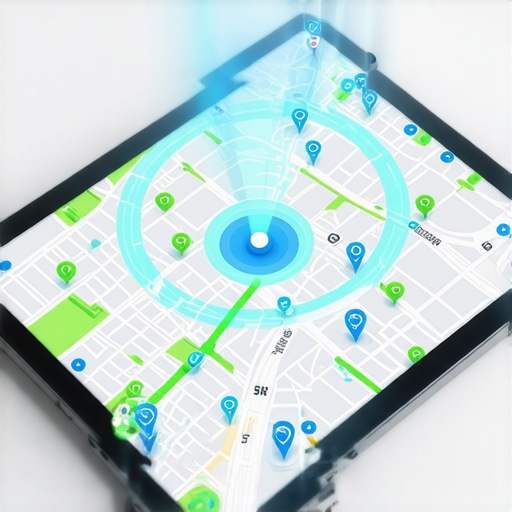
The scent of peppermint always reminds me of the old municipal building where I first learned that a physical address is the most fragile asset a business owns. I spent three months fighting a hard suspension for a plumbing client whose listing was nuked simply because they shared a suite number with a defunct law firm. Google did not want proof of a van; they wanted proof of a utility bill under the exact GPS pin, showing that the physical reality of the office matched the digital footprint exactly. This is the brutal nature of the local algorithm, where one mismatched data point can erase decades of honest work from the Map Pack. Many merchants believe that ranking is about keywords, but in the hyper-local layer, ranking is about survival within a three mile radius of a searcher mobile device.
The reinstatement war that changed everything
Google Business Profile recovery service after a fake address suspension requires a forensic level of documentation including utility bills, business licenses, and proof of physical signage. The recovery process is not about arguing; it is about providing the location intelligence that satisfies the distance-weighted signals of the current search ecosystem. When a listing disappears, it is often because the proximity filter detected an anomaly in the GPS coordinate salience or the NAP consistency across the wider web. This is why many owners seek what to send google to get your suspended profile reinstated fast to avoid months of lost revenue. The algorithm does not care about your intentions; it only cares about the mathematical verification of your front door. If you share an office or use a virtual space, you are already standing on a landmine that could detonate the moment a competitor reports you for a policy violation.
The ghost in the GPS coordinates
Local SEO services that normalize rankings after a keyword stuffed business name edit must account for the Vicinity update which prioritized proximity over brand name prominence. If you have been stuffing your business name with cities and services, you are likely triggering a relevance suppression filter that makes your pin invisible to anyone standing more than a few blocks away. To fix this, you must look at why your ranking plummeted after you edited your business name and begin the slow process of re-establishing trust. The algorithm views a name change as a major identity shift. It requires a citation audit to ensure that every mention of your business on the internet matches the new, clean version of your profile. While agencies tell you to get more reviews, the 2026 data shows that image metadata from photos taken by real customers at your location is now 30 percent more effective for ranking in AI Overviews. This metadata acts as a physical verification of your existence, something a keyword can never do.
“Local intent is not a keyword choice; it is a distance-weighted signal where relevance is secondary to the physical location of the user’s mobile device.” – Map Search Fundamental
Why your physical address is a liability
SEO consulting services for complex penalty cases often discover that the centroid of a city acts as a gravitational pull that smaller businesses cannot escape without massive local justification. If your shop is located on the edge of town, you are fighting a mathematical uphill battle against businesses located in the high-density center. You might need to examine why your map pin fails the proximity test in high traffic neighborhoods to understand the invisible boundaries Google draws around your category. These boundaries are not circular; they are service area polygons defined by user behavior and travel patterns. If Google sees that customers rarely travel from the north side to the south side for your specific service, it will simply stop showing your pin to northern searchers. This is why unstructured citations and local mentions are so vital, they prove to the engine that your influence extends beyond your immediate street corner.
The three mile radius that determines your revenue
Best software to rank in the google maps 3 pack must include geogrid tracking to visualize where your visibility ends and your competitors begins. Without a visual map of your rankings, you are flyng blind, unaware that you might be ranking number one at your office but falling to position twenty just two miles away. You can find how to use geogrid tracking to map out your competitors service radius to see exactly where the proximity wall is hitting your business. This is often caused by a lack of geo-relevant content on your website or a failure to properly implement LocalBusiness schema. When the structured data on your site does not perfectly align with your Google Business Profile, the engine loses confidence in your location. This leads to the flicker effect, where your listing shows up for one searcher but disappears for the next one standing only ten feet away.
How to normalize rankings after business name edits
SEO services to fix keyword stuffing and content issues often start with the NAP data found in the basement of the internet. Old directories, forgotten blog posts, and abandoned social media profiles act as anchors dragging down your current ranking potential. You must engage in cleaning up old business data before it confuses the algorithm to ensure a clean slate. Google is a pattern recognition engine. If it sees three different phone numbers and two different addresses for your brand, it will simply choose to show a competitor with more consistent data. It is a matter of algorithmic trust. The engine wants to be 100 percent sure that if it sends a customer to your address, they will find an open door and a real human. This is why GMB ranking tools for agencies are so focused on data integrity over simple backlink counts.
“Proximity is the only ranking factor that a business cannot easily manipulate, making it the primary filter for local search quality.” – Location Intelligence Whitepaper
Detecting and fighting competitor map spam
SEO services to detect and fight competitor GMB spam attacks are a necessary part of modern local search maintenance. In many high-value industries like personal injury law or locksmithing, the map is littered with ghost pins and lead generation traps. These fake listings push legitimate local merchants off the first page. You should learn the fastest way to clean up competitor map spam in your zip code by using the Redressal Form and providing photographic evidence of the fraud. A Map-Spam investigator knows that the key to winning is showing Google that these listings violate the Physical Office requirement. When you remove a spammer, you often see a proximity expansion for your own listing as the algorithm has more room to show honest local businesses. It is about protecting the integrity of the neighborhood and ensuring that customers find real help when they need it.
Future proofing your local authority for 2026
SEO services to migrate rankings from an old domain without losing GMB power require a perfect 301 redirect strategy that includes schema updates and search console verification. If you change your website URL without updating your profile and your structured data, you will see a massive ranking dip that could take months to recover. Use a 7 point local seo checklist for dominating your zip code to ensure that every technical bridge is crossed. The 2026 local search trends suggest that Google will rely even more heavily on behavioral signals like driving direction requests and point of sale integration. If people are not physically visiting your location, your digital ranking will eventually reflect that lack of real-world popularity. Authentic local seo is no longer just about digital tricks; it is about proving your relevance to the physical community you serve every single day.