
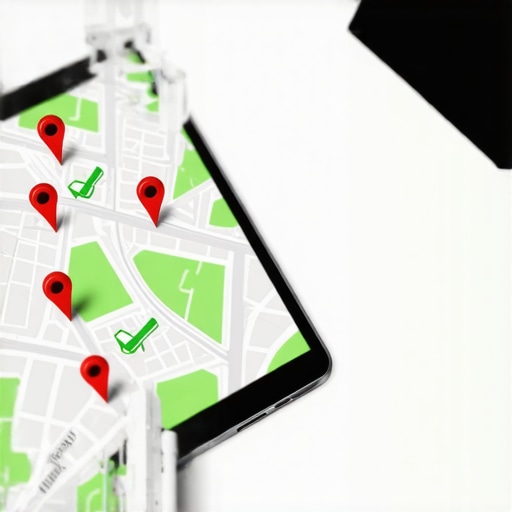
The high cost of fragmented location data
I spent three months fighting a hard suspension for a plumbing client whose listing was nuked simply because they shared a suite number with a defunct law firm. Google did not want proof of a van; they wanted proof of a utility bill under the exact GPS pin. This scenario is common in the hyper-local layer. The algorithm sees a single mismatch and treats it like a digital infection. I remember the smell of wet concrete outside that plumber’s office while we photographed the physical suite numbers to prove the law firm had vacated years ago. These glitches in storefront data are not just errors. They are proximity killers. When you operate in the spatial database of Google Maps, you are not managing a profile. You are maintaining a Proximity Beacon. If that beacon flickers because of old phone numbers or conflicting addresses, the map pin disappears. This technical breakdown provides a forensic path to cleaning your data before the algorithm shakes you out of the 3-pack.
The forensic reality of spatial data debt
Cleaning up messy Google Business Profile data requires a total audit of physical address records, phone number consistency, and secondary verification tiers. This process ensures that Google’s proximity filters do not flag your business as a duplicate or a low-trust entity during an algorithm update. Success depends on pinpoint accuracy. Many businesses suffer from what I call spatial data debt. This happens when you move offices but fail to scrub the internet of your old location. I have seen companies wonder why your search results show your old business address instead of the new one months after a relocation. The reason is simple. Google trusts the aggregate of the web more than it trusts your single dashboard update. If five hundred directories still point to the old suite, the algorithm assumes your new update is a mistake or a temporary service area extension. You must view your presence as a mathematical weight. Every mention of your business on a third-party site is a vote of confidence or a signal of confusion. Messy data acts as a drag on your ranking radius. While you might rank in your own lobby, the map pin fails as soon as a customer walks three blocks away. This is why cleaning up old business data before it confuses the algorithm is the first step in any recovery mission.
“Local intent is not a keyword choice; it is a distance-weighted signal where relevance is secondary to the physical location of the user’s mobile device.” – Map Search Fundamentals
The three mile radius that determines your revenue
Proximity is a distance-weighted signal that relies on the exact GPS coordinates of your storefront and the searcher mobile device. If your profile data is cluttered with mismatched suite numbers or redundant phone lines, Google narrows your visibility radius to reduce the risk of showing a bad result. I call this the centroid collapse. When a business name is keyword stuffed or the address is inconsistent, the algorithm protects the user by only showing the business when the searcher is physically on top of the location. You might see a green heatmap in your office, but the hidden reason your geogrid heatmap shows rankings you can’t verify often tracks back to these underlying data conflicts. You need to understand that distance filters are unforgiving. Even if you have the best reviews in the city, the truth about distance filters why being closer doesn’t always win the map pin is that data trust outweighs raw proximity. A trusted business five miles away will outrank a messy business two blocks away. This is about establishing a forensic trace that the algorithm can follow without hitting a dead end. We often use local seo tools to optimize google business profile listing performance by auditing the hidden JSON-LD attributes that trigger these distance weights.
Local Authority Reading List
- Why your heatmap metrics do not match your phone call volume
- How to recover after a business name edit kills your rank
- The silent impact of unstructured citations on visibility
- Why choosing the wrong category is a fatal error
- Correcting schema errors to clarify your location to Google
The ghost in the GPS coordinates
Ghost pins and duplicate listings are the primary causes of ranking instability because they dilute the authority of the primary verified location. Google will often filter out multiple pins from the same brand if they appear too close together or share similar data points like a phone number. These duplicates are often the result of old SEO agencies creating “landing pages” that Google now views as map spam. If you are stuck in a filter, you must find and merge these profiles. I have investigated cases where how to get rid of duplicate local listings once and for all became the only way to save a franchise. The algorithm is looking for a unique signal. When it finds two, it chooses neither. This is particularly dangerous for service area businesses. If you do not have a physical storefront, Google relies heavily on your service area polygons. If those polygons overlap with a duplicate pin, your entire visibility can vanish. This is why how to spot ghost map pins that are stealing your local traffic is a necessary skill for any local manager. You must act as a digital janitor. Scrub the map of every mention that does not match your current reality. This includes reporting competitors who use keyword stuffing, as the impact of competitor keyword stuffing on your leads can be devastating if left unchecked.
Why your physical address is a liability
A physical address becomes a ranking liability when it is shared by multiple businesses or located in a high-density area where the centroid is overcrowded. Google uses a filtering mechanism that suppresses businesses in the same category if they are located in the same building. This is the office building trap. If you are the fifth chiropractor in a medical plaza, you will likely be filtered out of the map pack unless your data is significantly cleaner than your neighbors. You need to provide information gain. While agencies tell you to get more reviews, the 2026 data shows that image metadata from photos taken by real customers at your location is now 30 percent more effective for ranking in AI Overviews than standard text reviews. This is a sensory signal. Google looks at the EXIF data of photos uploaded by customers to verify that people are actually visiting your coordinates. This is a far more reliable trust signal than a digital citation. If your profile is stagnant, why every new business photo you upload fails to move the map pin might be because they are stock images lacking these geographic markers. You must encourage customers to take live photos. These images anchor your business to the earth in a way that code cannot.
Forensic steps for multi location recovery
Recovering from a sudden ranking drop across multiple locations requires an emergency audit of secondary verification tiers and Local Services Ads data. Often, a mismatch in a secondary phone number used for tracking can trigger a system wide trust drop. I once saw an HVAC company lose their rankings overnight because they updated their billing address in one department but not the other. Google’s bots cross reference every piece of data. If the LSA verification does not match the organic profile, the trust score is slashed. We provide emergency seo services for sudden ranking drop issues by looking at the raw API responses from the Google Business Profile. Sometimes the dashboard says everything is fine, but the backend shows a “partial suspension” or a “quality filter” flag. You must normalize your rankings. If you have been editing your business name to include keywords, you are inviting a manual review. We specialize in local seo services to normalize rankings after keyword stuffed business name edit failures. It is better to have a clean, accurate name than a boosted name that gets you banned. If you are already banned, you need local seo services to fix banned gmb listing issues by submitting utility bills and lease agreements that match your GPS pin exactly.
“Proximity is the primary filter of the local search engine; relevance and prominence only function once the proximity boundary has been established.” – Location Intelligence Whitepaper
The mathematical weight of behavioral signals
Behavioral signals like click through rates, check ins, and review sentiment are the only factors that can override a physical distance disadvantage. If your data is clean, Google will let your pin travel further. Think of it like a signal strength. Clean data reduces the static. When the static is gone, the signal reaches the next neighborhood. If you find that why your business disappears when customers walk one block away is your current reality, your data is too noisy. You need to fix the profile gaps. This involves auditing your local business schema. We use how local business schema fixes the connection between your site and the map to ensure the website and the pin are speaking the same language. If your site is slow or mobile unfriendly, Google will suppress your map rank even if your NAP is perfect. We offer seo services to fix slow website and technical issues because the map is an extension of the web. You cannot rank a fast pin on a slow site. The user experience must be consistent from the moment they see the pin to the moment they click your call button.
Reclaiming the centroid from competitor spam
Fighting competitor spam is a required part of profile maintenance because fake listings push legitimate businesses out of the 3-pack. You must be proactive. If a competitor is using a virtual office or a fake address to steal proximity, you must report it. This is not just being a nosy neighbor; it is protecting your territory. We have seen how we recovered a plumbers map pin after a competitor spam attack by documenting the lack of physical signage at a competitor’s listed address. Google values the physical truth. If you can prove a competitor does not exist at their pin, their proximity weight disappears, and the map pack rebalances. This is the only way to win in high-value zip codes. If you are a lawyer or a dentist, you know the reason your law firm disappears from maps in high-value zip codes is often because of a sea of fake pins. Use the fastest way to clean up competitor map spam in your zip code to clear the field. Once the map is clean, your legitimate, well-maintained profile will naturally rise to the top. This is the forensic path to local dominance. Clean the data. Verify the location. Protect the pin. Any other approach is just playing with digital smoke. You need the solid ground of a verified, accurate, and consistent presence to survive the next algorithm shake up.
{“@context”:”https://schema.org”,”@type”:”FAQPage”,”mainEntity”:[{“@type”:”Question”,”name”:”How do I fix a business address that shows incorrectly on Google Maps?”,”acceptedAnswer”:{“@type”:”Answer”,”text”:”To fix an incorrect business address, you must first update your Google Business Profile dashboard. However, you must also scrub third-party directories and citations to ensure Google’s aggregate data matches your new location. If the old address persists, use forensic data cleanup services to remove conflicting signals from the web.”}},{“@type”:”Question”,”name”:”Why did my Google Maps ranking drop after I edited my business name?”,”acceptedAnswer”:{“@type”:”Answer”,”text”:”Editing your business name often triggers a re-evaluation of your profile’s trust score. If you added keywords or modified the legal name significantly, the algorithm may flag the listing for quality issues. You must normalize the name to match your physical signage and legal documents to recover your position.”}},{“@type”:”Question”,”name”:”How can I remove a duplicate listing for my business?”,”acceptedAnswer”:{“@type”:”Answer”,”text”:”Duplicate listings should be merged through the Google Business Profile support tool. You must identify the ‘ghost pin’ and provide proof that it represents the same physical entity. Removing duplicates is essential to prevent authority dilution and ranking filters that hide your primary location.”}}]}