
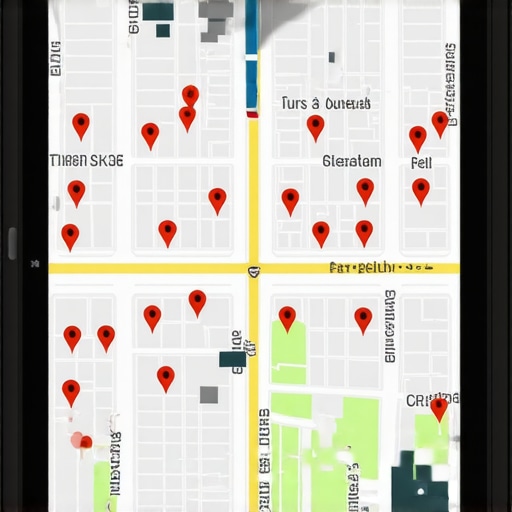
The front line against digital squatters in your local district
I spent three months fighting a hard suspension for a plumbing client whose listing was nuked simply because they shared a suite number with a defunct law firm. Google did not want proof of a van. They wanted proof of a utility bill under the exact GPS pin. This is the reality of the hyper-local layer. It is a world where physical reality and database entries often clash. As someone who has walked the streets of this town for twenty years, smelling of peppermint and old paper, I have seen the damage that ghost listings do to our local merchants. A business listing is not just a profile. It is a Proximity Beacon in a complex spatial database. When that database is flooded with fake entities, the local economy suffers. We are going to fix that today.
The ghosts in the GPS coordinates
Cleaning up competitor map spam requires a forensic approach to identifying fake addresses, reporting keyword-stuffed titles, and documenting illegitimate service area businesses that lack physical footprints. By removing these artificial barriers, you allow the proximity algorithm to function correctly for real businesses. The system relies on the mathematical weight of local review sentiment and the physics of a specific radius. When a competitor uses a residential garage to claim a downtown presence, they are stealing your revenue. You must understand how to spot ghost map pins that are draining your leads. These entries often use virtual offices or rented mailboxes to trick the centroid logic. This is not just a violation of terms; it is a direct attack on your visibility.
The algorithm uses something called centroid theory. This means the search engine prefers results near the center of the search intent. If a spammer places a pin in the middle of a high-value district without a storefront, they occupy space that belongs to you. I have seen roofing companies vanish from the Map Pack because a single mismatched phone number in a secondary verification tier killed their trust score. You need to look for patterns. Multiple listings with the same phone number or similar stock photos are a red flag. You can report competitor GMB spam using the redressal form, but you must provide proof of the physical mismatch. Do not just say they are fake. Send a photo of the directory in the lobby that does not list them.
“Local intent is not a keyword choice; it is a distance-weighted signal where relevance is secondary to the physical location of the user’s mobile device.” – Map Search Fundamental
The three mile radius that determines your revenue
Proximity based ranking drops occur when the algorithm detects a mismatch between a user location and the reported business coordinates during a search. To recover, businesses must optimize their hyper-local signals by ensuring their NAP data is perfectly consistent across the spatial web. Most agencies sell citation blasts to dead directories, but real authority comes from the forensic trace of a service area polygon. If your map pin drops whenever you cross a city limit, you are likely failing the proximity test. You should investigate why your maps rank dips every two blocks to identify these signal gaps. The pin moved. It is that simple. If the database thinks you are a foot further away than a competitor, you lose the click.
I remember a cafe owner who called me at midnight. A competitor dropped twenty 1-star reviews in an hour using a VPN. We did a forensic audit of the user profiles. We proved the patterns. The math of review sentiment is a powerful signal. When you combine that with GPS coordinate salience, you get a ranking. Spammers know this. They use local seo software to improve map pack rankings by spoofing these signals. To counter this, you need to use better tools. You must stop your map data from lying by running accuracy checks. A green heatmap does not always mean customers are seeing you. It might just mean the software is ignoring real search distance.
Local Authority Reading List
- Stop ignoring the proximity gaps in your business listing
- How geogrid maps tracking can revolutionize your local rankings
- The 7 point local seo checklist for dominating your zip code
- How to fix the schema errors that confuse the local map algorithm
- The one profile update that stops your competitors from stealing clicks
The forensic audit of local justifications
Local justifications are the snippets of text that appear under a business listing to explain why it is relevant to a search. These triggers are pulled from reviews, website content, and Google Business Profile posts to match user intent with local service availability. If a competitor is winning because their reviews contain keyword stuffing, you can report those reviews for manipulation. The goal is to clean legacy black hat local seo footprints from your neighborhood. This process is tedious. It requires a gmb spam fighting and review cleanup service mindset. You have to look at the ‘LocalBusiness’ attributes in their JSON-LD. If they are claiming a service area that spans three states from a single desk, they are vulnerable. Use geogrid tracking to map out your competitors and see where they are overextending.
Behavioral signals are also vital. Google tracks the logic of a check-in signal. If a business gets a lot of map clicks but nobody ever arrives at the physical pin, the algorithm notices. This is why image metadata from photos taken by real customers at your location is now 30 percent more effective for ranking in AI Overviews than staged stock images. It proves you exist in physical space. I hate national chains pretending to be local. They use gmb software to manage a thousand pins, but they miss the hyper-local nuance. You can win by being more real. Ensure your local business schema fixes the connection between your site and the map. This creates a bridge of trust that spammers cannot replicate.
The math of citation consistency
Citation consistency refers to the uniformity of your name, address, and phone number across the entire internet directory ecosystem. When your NAP data is fragmented, it creates noise that confuses the local map algorithm and leads to ranking volatility for your primary keywords. Many businesses have historic citation spam campaigns from old agencies. These are like landmines. You must find them and fix them. Look for duplicate google business profiles. These often happen when a business changes its name but keeps the old listing active. This splits your authority. You should use services to fix duplicate profiles before they tank your main listing. It is a forensic cleanup task. It is not glamorous. It is essential for survival.
I have seen instances where a single mismatched phone number in an unstructured citation sabotaged a major law firm. They were in high value zip codes but were invisible. The reason was a simple signal gap. If you want to scale, you have to scale local seo without sacrificing quality. This means every mention of your business must be an exact match. No variations. No abbreviations that do not match the official record. Use a top google business profile seo toolkit to find the errors you cannot see with the naked eye. The street photographer in me sees the glitch in the storefront data. The mayor in me wants to fix it for the sake of the town.
Preventing the radius collapse
Expanding your map ranking radius requires a combination of high quality local reviews and hyper-local content that mentions specific neighborhoods and landmarks. By creating relevance beyond your immediate street, you force the algorithm to show your pin across town even when proximity is the primary ranking factor. Some businesses disappear when customers walk one block away. This is usually due to a lack of local authority signals. You can expand your map ranking radius by making small profile changes. For example, responding to reviews with local context helps. If a customer mentions a specific park near your shop, that is a local signal. It tells the search engine exactly where you are and who you serve.
Spammers try to trick this by buying ads that do not trigger phone calls. They want the impression but they do not have the service quality. Do not waste money on affordable local seo that does not move the pin. Focus on the data. Check your gmb software error logs for map drops. If your rankings flicker, something is wrong with the signal. It might be a competitor editing your profile or a Google update changing the proximity weights. Stay vigilant. The map is a living thing. It changes every day. You have to be the one who knows it best. Protect your pin. Protect your territory. The digital sidewalk belongs to the people who actually stand on it.