
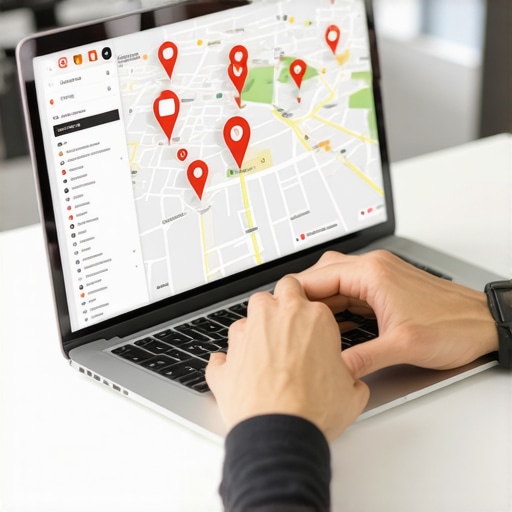
The One Tweak to Your Google Business Profile Posts That Wins the Map Pack
If you are posting to your Google Business Profile (GBP) every single day and seeing zero movement in your rankings, you aren’t alone. There is a heated debate currently raging on Reddit and local SEO forums about whether GBP posts even “matter” anymore. Some claim they are a ghost town; others swear by them. I’m here to tell you that they both are right – and both are wrong. If you are posting generic “Check out our latest discount” updates, you are wasting your time. But if you understand how to use posts as a delivery vehicle for google business profile seo, they become your most powerful weapon for Map Pack dominance.
Most small businesses are effectively invisible just five blocks away from their physical office. This is the “Signal Gap.” You might rank #1 at your front door, but by the time a customer searches from the local park or a nearby intersection, you’ve vanished. To fix this, you need more than just “content” – you need a structural shift in how you communicate with the algorithm. I’m Shahid Anwar, and I’ve spent my career helping local and multi-location businesses turn stagnant profiles into lead-generation machines. Today, I’m revealing the “One Tweak” that moves the needle when everything else fails: Hyper-Local Signal Stacking.
The 2026 Map Pack Reality: Why You Need Google Business Profile Optimization
The local search landscape has shifted. We are no longer in the era where “filling out your profile” is enough to win. As we move deeper into the mid-2020s, the “Proximity Test” has become the ultimate gatekeeper. In fact, the Search Atlas Study (May 2025), which analyzed over 3,200 local businesses, proved that post-relevance and geo-signals are now the primary drivers of visibility in high-competition sectors like food, health, and law.
The 2026 algorithm update prioritizes “Hyper-Local Proximity” over broad, city-wide authority. This means Google isn’t just looking for a “Plumber in Chicago”; it’s looking for the plumber who has documented activity near the Wicker Park neighborhood or the Bucktown intersection. This is why comprehensive google business profile optimization is no longer a “set it and forget it” task. It is a process of constant signal generation. If you want to rank higher on google maps, you have to prove to the algorithm that your business isn’t just located in a city, but is active within specific micro-neighborhoods.
I’ve seen businesses implement this shift and experience a 280% increase in Map Pack visibility within 90 days. This isn’t magic; it’s infrastructure. By closing the signal gap, one client saw a 3.4x increase in local leads simply by changing what they talked about in their weekly updates. You can read more about this in our guide on How Local SEO Trends in 2026 Will Reward Hyper-Local Proximity.
The “One Tweak” Revealed: Hyper-Local Signal Stacking
The secret isn’t that you post; it’s how you stack signals within the first 80 characters of that post. Most business owners treat GBP posts like Facebook posts. They write a long caption and hope for the best. But Google’s “Justifications” (those little snippets that appear under your map listing) often pull directly from your posts. If you want to rank google business profile assets effectively, you must master the stack.
Hyper-Local Signal Stacking requires that every single post includes four specific elements:
- A Specific Neighborhood Name: Don’t just say “the city.” Name the district.
- A Landmark or Local Intersection: “Just past the Central Library” or “Near the corner of 5th and Main.”
- A Service-Specific Result: “Fixed a leaking water heater” instead of “We do plumbing.”
- A “Near Me” Anchor Link: Linking the post to a corresponding geo-targeted service page on your website.
Why does this work? It forces the Google algorithm to associate your map pin with specific micro-coordinates. When you use a professional gmb ranking service, this is the level of technical detail they should be implementing. You are essentially “geo-tagging” your text content.
The Contrast: Bad Post vs. Winning Post
The Bad Post (Generic): “We offer the best dental cleanings in the city! Call us today to book your appointment. #Dentist #CleanTeeth”
The Winning Post (Signal Stacked): “Providing pediatric dental cleanings for families in Riverside Heights, just blocks away from Riverside Park. Our team just finished a successful check-up near the intersection of River Rd and 4th St. Need a dentist near you? Book here: [Link to Riverside-specific landing page].”
The second post tells Google exactly where you are, what you did, and who you did it for. This is how you bridge The Signal Gap: Why Your Profile SEO Service Isn’t Winning the 3-Pack.
Step-by-Step Implementation Guide to Rank Higher on Google Maps
Ready to turn your profile into a local powerhouse? Follow this 4-step framework to implement Signal Stacking today.
Step 1: Audit Your Current Reach
You cannot fix what you cannot measure. Use a google maps rank tracker to see your current “heat” levels. Are you only ranking in a 1-mile radius? Identifying where your pin “drops off” tells you exactly which neighborhoods you need to target in your next stack of posts.
Step 2: Identify “Proximity Gaps”
Look at your geogrid. If you see “Red Zones” (ranking #10 or lower) in a neighboring zip code where you actually have customers, those are your targets. You need to create content that “claims” those zones. This is a core component of any high-level google maps ranking service.
Step 3: Create “Zone-Specific” Content
Don’t post for everyone at once. Create a schedule where Monday’s post targets “Neighborhood A,” Wednesday’s post targets “Intersection B,” and Friday’s post targets “Landmark C.” This consistent geographic “pinging” expands your radius of influence.
Step 4: Use Technical Local SEO Tools
To amplify your text signals, use local seo tools to ensure your images are also working for you. Before uploading a photo of your work, ensure the metadata reflects the geographic location. While Google says they strip EXIF data, the visual AI still recognizes landmarks in the background of photos, which reinforces your text-based signal stacking.
Beyond the Post: Supporting Your Map Rank
While Signal Stacking is the “One Tweak” that changes the game, it doesn’t live in a vacuum. To maintain a google business profile seo advantage, you must support your posts with broader infrastructure. This includes robust citation building services and aggressive review management seo.
I often see business owners who finally hit the #1 spot, but their phone still isn’t ringing. This happens when there is a disconnect between “ranking” and “relevance.” If your posts are signal-stacked but your reviews are two years old, users will skip over you for the #2 spot. You must ensure that your profile looks “alive.” For a deeper dive into this phenomenon, check out our analysis: Why Your Phone Isn’t Ringing Even Though You’re in the 3-Pack.
Furthermore, don’t ignore the technical side. Utilizing a professional google business profile seo strategy involves ensuring your website’s schema markup matches the hyper-local signals you are sending through your GBP posts. If your post mentions “Riverside Heights,” your website should have a “Service Area” page that also mentions “Riverside Heights.”
Measuring Success: Geogrid Heatmaps and Ghost Pins
How do you know if the tweak is working? You look at the grid. Traditional rank trackers that give you a single number for a city are obsolete. You need to see how your visibility expands geographically. Using local seo tools, you can visualize your growth from a tiny dot of visibility to a city-wide dominant force.
Watch out for “Ghost Map Pins.” These are listings that appear to rank well in certain tools but don’t actually show up for real users due to AI filters or “Possum” algorithm updates. By using 7 Geogrid Tracking Tactics to Beat 2026 AI Map Filters, you can ensure that the traffic you see in your reports is translating into real-world customers.
The goal is to see your “Green Zone” (Rank 1-3) expand outward from your office location. If you see the green expanding toward the specific landmarks you’ve been mentioning in your posts, you have successfully “engineered” your proximity.
Conclusion: Engineer Your Profile for Growth
Stop “tinkering” with your profile and start engineering it. The Map Pack isn’t a lottery; it is an algorithm that rewards specific, localized data points. By implementing Hyper-Local Signal Stacking, you are giving Google exactly what it wants: proof of proximity and proof of relevance.
If you want to rank google business profile listings that actually convert, you must be the most “local” option in the eyes of the AI. Don’t wait for your competitors to figure this out. Audit your profile today, identify your proximity gaps, and start stacking your signals. If you’re unsure where to start, use a google business profile audit tool to find your ranking gaps and see Why Your Map Rank Heatmap Looks Better Than Your Actual Lead Count to ensure your strategy is focused on ROI, not just ego metrics.