
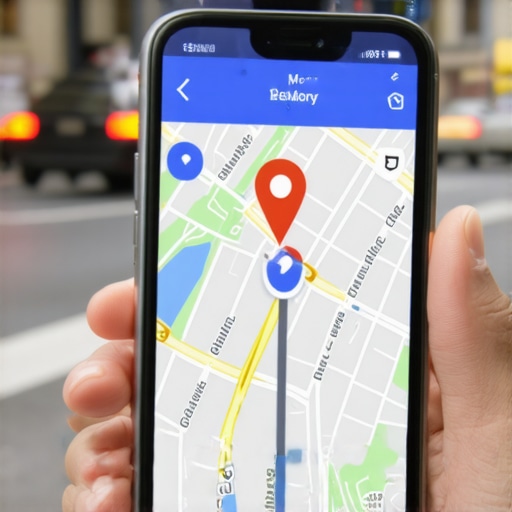
How We Recovered a Plumber’s Map Pin After a Competitor Spam Attack
It is 7:00 AM on a Monday morning. For “Joe,” a veteran plumber in a high-density metropolitan area, this is usually the busiest hour of the week. Typically, his phone is ringing off the hook with emergency calls for burst pipes and clogged drains. But today, the silence is deafening. By 10:00 AM, Joe realizes his lead volume hasn’t just dipped – it has evaporated. A quick search for “plumber near me” reveals the devastating truth: his Google Business Profile (GBP), which had sat comfortably in the top three of the local Map Pack for years, is nowhere to be found.
Joe didn’t violate any policies. He didn’t stop asking for reviews. He was a victim of a sophisticated “Same Location” spam attack. As a GMB Reinstatement Specialist, I see this nightmare scenario unfolding with increasing frequency in 2025 and 2026. This is the story of how we diagnosed the attack, fought through the technical bureaucracy of Google’s filtering algorithm, and successfully recovered Joe’s map pin.
Section 1: The Disappearing Act
When Joe contacted me, his business was in a state of “digital invisibility.” This wasn’t a standard suspension where the dashboard says “Suspended.” Instead, his profile was still active in the backend, but it had vanished from the public-facing Google Maps results. This phenomenon is often the result of Google’s proximity and duplication filters. To understand why this happens, we have to look at Why Your Business Disappears When Customers Walk One Block Away.
In Joe’s case, the cause was a malicious tactic identified in research from the Local Search Forum and Reddit’s SEO communities: the “Same Location” spam attack. Google’s algorithm is designed to provide a diverse range of results. If Google detects multiple businesses of the same category at the exact same physical coordinates, it will often “filter out” all but one to prevent map clutter. Competitors have learned to weaponize this. By moving their own pins – or creating fake “ghost pins” – directly on top of a legitimate business’s coordinates, they can trigger Google’s deduplication filter, causing the legitimate, established business to be hidden from the Map Pack instantly.
For a service-area business like a plumber, losing that visibility means losing 80% or more of your inbound leads overnight. The “Same Location” filter doesn’t care about your 500 five-star reviews or your decade of history; it cares about “cleaning up” the map interface for the user. Joe wasn’t just competing for rankings anymore; he was fighting for the right to exist on the map.
Section 2: Anatomy of a Competitor Spam Attack
In the high-stakes world of local home services, the battle for the Map Pack has turned into a digital arms race. Competitors are no longer just trying to out-rank you; they are trying to delete you. In our investigation of Joe’s profile, we discovered three distinct layers of the attack.
1. The Pin-Drop Overlap
We found four “new” plumbing businesses that had recently appeared in the same office complex where Joe rented a small executive suite. None of these businesses had signage, staff, or a physical presence at that address. By setting their address to the exact same suite number or even just the building’s main pin, they forced Google’s algorithm to choose a “winner.” Because these new profiles were optimized with aggressive google maps ranking service tactics, Google’s AI mistakenly prioritized the fresh (though fake) data over Joe’s established profile.
2. Keyword-Stuffed “Burner” Profiles
The attackers used AI-driven tactics to generate dozens of profiles with names like “Emergency Plumber Near Me – Best Plumbing Service.” While these names violate Google’s naming conventions, the sheer volume of them created a “noise” floor that pushed legitimate businesses down. By utilizing google maps ranking service techniques maliciously, these competitors were able to flood the local radius with “ghost pins” that captured clicks before a user could ever find Joe.
3. AI Profile Overwrites
One of the most insidious tactics we’ve seen in 2026 is the use of “suggested edits” powered by AI botnets. Competitors suggested edits to Joe’s profile, claiming his business was “Permanently Closed” or that his phone number had changed. If enough “local guides” (often fake accounts) suggest the same edit, Google’s AI may automatically accept the change without notifying the owner until the damage is done. This creates a state of “signal drift” where Google no longer trusts the validity of the original listing.
Section 3: The 7-Step Recovery Framework
Recovering a map pin isn’t about luck; it’s about providing an irrefutable mountain of evidence that forces Google’s manual reviewers to override the automated filter. We followed a systematic framework based on the methodologies of industry leaders like Darren Shaw to get Joe back on the map.
Step 1: Identify the Suspension Type
First, we had to determine if we were dealing with a “Soft Suspension” (the listing is still visible but you can’t manage it), a “Hard Suspension” (the listing is removed entirely), or a “Filter Event” (the listing is active but hidden). Joe was experiencing a Filter Event. This is often harder to fix than a suspension because there is no “Appeal” button in the dashboard. You have to prove to Google that your business is the “Primary” entity at that location.
Step 2: Audit for Profile Violations
Before contacting Google, we performed a google business profile seo audit. We ensured Joe’s Name, Address, and Phone number (NAP) were 100% consistent across the web. Any discrepancy gives Google a reason to keep the filter active. We used The 3-Step Google Maps SEO Audit That Actually Finds Ranking Gaps to identify and fix minor inconsistencies in his Yelp and Yellow Pages listings that were weakening his “trust signal.”
Step 3: Gather “Golden Evidence”
Google’s support team is overwhelmed. To get a 12-to-24-hour reinstatement, you need what I call “Golden Evidence.” For Joe, we compiled:
- A scanned copy of his official Plumbing Contractor License.
- A recent utility bill (water/electric) showing the business name and the exact address.
- A video walkthrough of his office space, showing the permanent signage and his branded van parked out front.
- A copy of his commercial lease agreement.
This evidence is the only language Google’s reinstatement team speaks fluently.
Step 4: The Reinstatement Appeal
We submitted a formal reinstatement request, even though the profile wasn’t technically “suspended.” In the comments, we explicitly stated: “Our business is being filtered due to fraudulent ‘Same Location’ pins from competitors. Please see the attached evidence of our physical presence and legal registration.” We were essentially performing google business profile optimization by cleaning the metadata Google associates with his physical location.
Step 5: The Waiting Period
The standard waiting period is currently 5 to 7 business days. During this time, it is vital not to submit multiple tickets. Doing so resets your place in the queue and can flag your account as “spammy.”
Step 6: Secondary Appeals
If the first appeal is rejected (which happens about 40% of the time due to automated bots), we move to a secondary appeal. This involves responding to the rejection email with even more specific data, such as a link to the Secretary of State’s business registry showing the business is in good standing.
Step 7: Escalation to the GBP Help Forum
When the standard support channels failed to recognize the competitor spam, we escalated the case to the Google Business Profile Help Forum. By presenting the case to a “Product Expert” (a volunteer with a direct line to Google’s internal teams), we were able to have the “ghost pins” surrounding Joe’s office manually reviewed and removed for policy violations.
Section 4: Using Geogrid Tracking to Spot “Ghost Pins”
One of the most powerful tools in our arsenal during Joe’s recovery was the use of a google maps rank tracker. Traditional rank trackers that give you a single number (e.g., “You are #4 for Plumber”) are useless in a spam attack. You need a geogrid – a visual heatmap that shows your ranking at specific GPS coordinates across your city.
When we ran Joe’s first geogrid report, the problem became visually obvious. In a 5-mile radius, Joe was “Green” (Ranking #1-3) in most areas, but in the 1-block radius immediately surrounding his office, he was “Grey” (unranked). This is the classic signature of a “Same Location” filter. It’s what we call a “proximity gap.”
By using a google maps rank tracker, we could identify exactly where the “ghost pins” were located. We found that every time Joe’s rank dropped to zero, there was a competitor pin located within 50 feet of his coordinates. To learn more about this process, see our guide on How to Spot Ghost Map Pins That are Stealing Your Local Traffic. This data allowed us to report those specific pins to Google for “Address Fraud,” eventually clearing the “noise” that was suppressing Joe’s legitimate business.
Section 5: Defending Your Rank in 2026
The landscape of rank google business profile strategies is shifting. In 2026, we are dealing with “High-Rise Signal Drift.” In dense urban areas, Google’s AI struggles to differentiate between businesses on the 1st floor versus the 10th floor. This verticality is the new frontier for map spam. Competitors are now “stacking” pins vertically to dominate the local SEO rankings.
To defend against this, you need a proactive defense strategy. Relying on local seo tools is no longer optional. You must monitor your geogrid weekly. If you see a sudden “grey patch” appearing in your neighborhood, you are likely under attack. Check out Why Geogrid Tracking is Your Best 2026 Defense Against AI Map Spam to understand the new defensive metrics.
Furthermore, you should invest in google business profile optimization to strengthen your “Entity Authority.” This means getting mentions from local news sites, sponsoring local events, and ensuring your “Service Areas” are clearly defined but not over-extended. Google is increasingly using “Real-World Signals” to verify businesses. If Google’s AI sees your branded truck in a neighborhood (via crowdsourced data or Android location history), it reinforces your map pin’s legitimacy. This is why we recommend Stop Your 2026 Reach Decay: 4 Geogrid Tracking Tactics to stay ahead of the AI curve.
Finally, utilizing professional gmb seo tools can help you automate the monitoring of your competitors’ name changes. If a competitor suddenly adds “Best Plumber” to their business name, your tools should alert you so you can report the naming violation before it impacts your rank. In 2026, the best offense is a relentless, automated defense of your google business profile seo.
Section 6: Conclusion & Expert Summary
Recovering Joe’s plumbing business wasn’t just about filling out a form; it was about reclaiming his digital identity from a malicious actor. After 14 days of intense documentation and escalation, Google finally cleared the “Same Location” filter. Joe’s map pin didn’t just return; it shot back to the #1 position because of the google business profile optimization work we did during the audit phase.
The lesson for every local business owner is clear: your Google Business Profile is your most valuable digital asset, and it is under constant threat. Whether it is a competitor moving their pin to your office or an AI bot suggesting your business is closed, the “set it and forget it” era of GMB is over. Reinstatement and protection are technical, legalistic processes that require precision and patience.
As a GMB Reinstatement Specialist, my advice is to audit your pin today. Don’t wait for the phone to stop ringing. Use a google maps rank tracker to check for those tell-tale grey spots, and make sure your “Golden Evidence” is ready in a folder on your desktop. If you are struggling with a suspension or a disappearing pin, remember that there is a path back to the top of the Map Pack – you just need the right framework to get there.
About the Author:
Fiza Feroz – GMB Reinstatement Specialist | Local SEO Expert
As a GMB Reinstatement Specialist, I have helped numerous local businesses navigate the complexities of Google’s policies. Whether your listing was flagged for violations or targeted by malicious competitors, my goal is to restore your visibility and protect your digital assets. I specialize in gmb ranking service and advanced google business profile seo to ensure my clients stay ahead of the competition.