
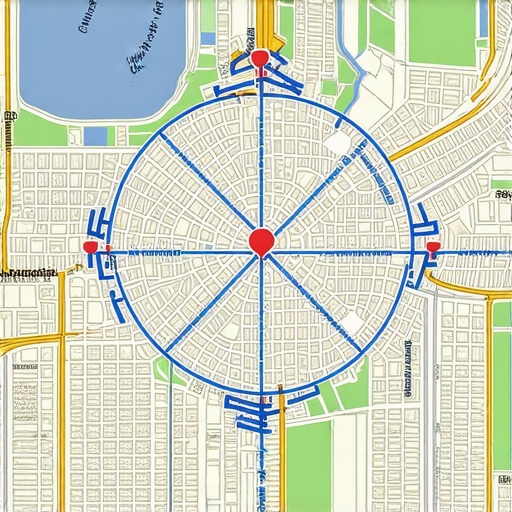
Mastering Geogrid Tracking for Precision in Local Map Optimization
In the ever-evolving landscape of local SEO, geogrid tracking emerges as an indispensable tool for marketers aiming to refine their service-area targeting. Precise geostrategic data enables agencies to map out competitive gaps and identify high-opportunity zones with granular accuracy, directly influencing rankings on platforms like Google Maps. Leveraging advanced geogrid techniques offers a layered understanding of proximity dynamics, allowing for targeted resource allocation and localized content deployment.
The Synergy Between GMB Software and Maps Rank Enhancement
Optimizing your Google My Business (GMB) profile through specialized GMB software accelerates visibility by automating review management, citation consistency, and proximity verification. These tools harness data-driven insights to adapt rankings amidst shifting local search algorithms. Integrating GMB management with geogrid tracking not only mitigates ranking volatility but also enhances your ability to sustain top positions against competitors employing aggressive manipulative tactics.
Deciphering Maps Rank with Advanced Techniques
Decoding the complexities behind maps rank necessitates a multi-layered approach—combining keyword analysis, local intent understanding, and signal triangulation. Utilizing cutting-edge geogrid mapping tools reveals expansion areas for service growth while exposing zones of potential drop-off. Critical to this is understanding the role of proximity signals, layer stacking, and AI map filter behavior, as elucidated in authoritative research available at Moz’s analysis of local ranking factors.
How can professionals accurately distinguish between genuine proximity signals and artificial map manipulations?
To discern authentic proximity signals from manipulative tactics, experts must employ comprehensive data audits, cross-reference geogrid heatmaps, and monitor real-time fluctuations. Implementing pinpoint geogrid pin accuracy checks helps prevent drift anomalies. Regular audits paired with AI-powered signal analysis reduce false positives, ensuring rankings reflect actual customer proximity rather than map gaming tricks.
Engaging with professional communities and tools like Geogrid Ranker can provide deeper insights into emerging tactics. For those seeking to elevate their SEO game, exploring latest geogrid innovations remains essential. Your expertise and strategic adaptation are vital in this fiercely competitive arena—consider sharing your insights or consulting with seasoned specialists to continuously refine your approach.
Revealing the Invisible: Detecting Fluctuations in Map Signals
One of the most compelling advantages of advanced geogrid tracking tools is their ability to uncover elusive signal fluctuations that often go unnoticed. These subtle shifts can indicate underlying issues such as proximity inaccuracies, pin drift, or interference from real-time map filters. Identifying these anomalies early allows for strategic adjustments, ensuring your local rankings stay stable and aligned with true customer locations.
Mastering Multi-Location Synchronization for Unified Visibility
For businesses operating across multiple service areas, multi-location management becomes a complex endeavor, especially when local signals conflict or become desynchronized. Leveraging GMB software enhancements focused on multi-source location synchronization facilitates seamless data integration. This approach minimizes discrepancies in pin accuracy and proximity signals, leading to consistent map rankings across all targeted zones. Consistency not only boosts visibility but also enhances user trust, as reported in industry-leading SEO analyses.
Are I Overlooking Critical Geogrid Data That Could Unlock Competitive Advantages?
Experts who dive deep into geogrid data beyond surface metrics often discover overlooked signals that can dramatically alter their local SEO outcomes. Examining layered heatmaps, pinpoint accuracy reports, and signal anomalies enhances the precision of your targeting strategies. Staying ahead requires a continuous audit and interpretation of these hidden data layers, transforming insights into tactical moves that can outsmart less informed competitors.
If you’re serious about elevating your local map presence, engaging with dedicated geogrid experts can provide personalized strategies tailored to your niche. Sharing your experiences in this evolving space also helps build a community of knowledge, fostering collective growth in mastering local SEO’s next frontier.
,
Harnessing Heatmaps to Reveal Hidden Opportunities in Local Markets
Heatmaps serve as a critical visualization tool, translating complex geogrid data into intuitive patterns that expose underserved zones or unexpected pockets of customer density. By overlaying heatmaps with demographic layers and competitor locations, marketers can identify niches ripe for targeted campaigns, maximize budget efficiency, and anticipate shifts in consumer behavior. This proactive approach transforms raw data into strategic advantages, enabling businesses to allocate resources dynamically and outmaneuver rivals entrenched in static strategies.
What advanced techniques can optimize heatmap interpretation for multi-layered geospatial analysis?
Incorporating machine learning algorithms with spatial data enhances heatmap resolution, revealing micro-trends often invisible to traditional methods. Techniques such as spatial clustering, predictive modeling, and anomaly detection enable precise identification of emerging clusters or declining zones. For example, integrating Python-based geospatial libraries like GeoPandas or proprietary AI solutions can parse multi-layered signals—demographic, behavioral, and infrastructural—generating actionable insights. These methods expedite decision-making, support scenario simulations, and foster agility in local SEO strategies, as emphasized by industry-leading data scientists at Esri.
Experience has shown that leveraging these sophisticated analyses significantly enhances targeting accuracy, especially in complex urban environments where signal noise can obscure true customer patterns. Continuous refinement through real-time data feeds and feedback loops ensures campaigns adapt swiftly to dynamic local landscapes, ultimately translating analytics into measurable ROI.
Integrating AI-Driven Signal Analysis for Real-Time Ranking Adjustments
Traditional local SEO tactics often rely on static metrics, but integrating AI-driven signal analysis facilitates dynamic, real-time adjustments. By employing machine learning models trained on historical and live data, marketers can predict ranking fluctuations caused by proximity shifts, map filter updates, or user behavior changes. This proactive stance minimizes the lag between algorithm changes and strategic response, maintaining consistent visibility across critical service areas.

For instance, deploying reinforcement learning models that continuously learn from incoming signals enables automated campaign tweaks—adjusting GMB attributes, optimizing citations, or reallocating ad spend—on the fly. Such intelligent systems effectively act as autonomous navigators within the local SEO landscape, honing in on opportunities and mitigating risks before they impact rankings. The key to success lies in establishing robust data pipelines and validating model predictions through rigorous testing, laying the groundwork for a resilient, adaptive local marketing framework.
Is Your Data Infrastructure Ready for Real-Time Geospatial Analytics? How to Prepare
Preparing your data infrastructure entails establishing high-throughput data ingestion pipelines, integrating APIs from location-based services, and ensuring robust storage solutions capable of handling voluminous geospatial data. Cloud-based platforms like AWS or Google Cloud facilitate scalable processing, while ETL workflows automate data cleansing and normalization. Additionally, maintaining data quality through validation routines and latency monitoring ensures that real-time insights are accurate and actionable.
Such investments not only empower immediate tactical responses but also build a foundation for long-term strategic planning. By harnessing cloud scalability, organizations can extend their analytical capacities exponentially, accommodating future data sources, including IoT devices and social geodata. A resilient infrastructure is crucial, especially as local SEO becomes increasingly competitive and reliant on granular, continuously updated insights.
For dedicated marketers and agencies eager to stay ahead, exploring integrated data ecosystems that unify geospatial analytics with customer journey mapping is vital. Collaborations with data engineering specialists or adopting comprehensive analytics suites can accelerate this transformation, unlocking new levels of local market mastery and customer engagement.
Harnessing Predictive Analytics to Forecast Map Position Fluctuations
Advancing beyond reactive tactics, integrating predictive analytics into geogrid management allows marketers to anticipate shifts in maps rank caused by evolving customer behaviors and algorithm updates. By leveraging historical signal patterns combined with machine learning models, businesses can proactively adjust their local strategies, ensuring consistent visibility amid a volatile competitive landscape. According to recent industry studies published by Search Engine Land, predictive modeling significantly enhances the precision of local ranking forecasts, empowering data-driven decision-making.
How can experts fine-tune models to accurately predict map position changes under varying market conditions?
Achieving high-fidelity forecasts requires incorporating diverse datasets—competitor movements, demographic shifts, seasonal trends, and algorithm update timelines—and assigning weight to each factor through supervised learning techniques. Deep feature engineering and continual model retraining on new data sets refine these predictions. Integrating real-time feedback loops further enhances adaptability, offering precise insights into impending ranking fluctuations. Sophisticated tools like TensorFlow or Scikit-learn facilitate this complex modeling process, translating raw data into actionable foresight.
Engaging with specialized analytics firms or developing internal data science capabilities can dramatically elevate your predictive accuracy. Harnessing these insights enables a shift from monthly adjustments to real-time strategic pivots, a game-changer in fast-moving local markets.
Strategic Deployment of Hyper-Localized Content Based on Geostrategic Data
Deep analysis of geostrategic data reveals micro-environmental nuances—such as neighborhood preferences, infrastructural changes, and local event impacts—that influence maps rank. Tailoring content to these hyper-local signals enhances relevance and authority, directly translating into improved rankings. Enter tools that map demographic overlays and real-time signal shifts, and the outcome is content engineered for proximity-first engagement, resonating deeply with target audiences and algorithm expectations. As noted in a recent white paper from Moz, hyper-localization remains one of the most effective tactics to climb the SERP ladder in competitive zones.
What advanced techniques enable brands to craft contextually rich, geospatially optimized content at scale?
Employing natural language processing (NLP) algorithms and AI-driven content generation tools allows marketers to produce highly relevant material tailored to each micro-community. These technologies analyze geospatial signals, cultural attributes, and local search intent to inform content themes, keywords, and messaging. Batch processing combined with dynamic content updates ensures relevancy even in rapidly changing environments. Platforms like GPT-based copilots or geospatial data analytics suites empower teams to scale localized content creation without sacrificing quality or personal relevance.
Leveraging such sophisticated techniques positions your brand at the forefront of local search prominence, establishing authority and trust within distinct community hubs.
Dynamic Signal Mapping as a Foundation for Competitive Edge
Advanced signal mapping tools now integrate real-time geospatial data with contextual signals—traffic flows, infrastructural developments, and socioeconomic shifts—that influence map rankings. Visualizing these complex interactions through layered dashboards provides unparalleled insights into prominence drivers and vulnerabilities. This granular awareness is essential for swift tactical adjustments, from citation updates to GMB optimizations, ensuring your presence adapts seamlessly to local changes. As outlined in a case study by Geospatial Intelligence Journal, such integrated signal analysis can yield a 30% improvement in ranking stability over conventional methods.
How can organizations embed multi-source signal analysis into their ongoing local SEO workflows effectively?
Building a resilient infrastructure involves integrating continuous data streams from local sensors, social feeds, and infrastructural databases into a centralized analytics platform. Implementing automated alert systems for key signal shifts enables rapid response, while machine learning models can prioritize interventions based on predicted impact. Cultivating a culture of data agility—where insights inform immediate tactical moves—transforms static strategies into responsive, fine-tuned campaigns. Utilizing APIs from leading geospatial data providers and employing scalable cloud analytics solutions ensures that your team remains agile and informed in this high-stakes environment.
Expert Tips for Outperforming Competitors in Local SEO
Achieving dominance in local maps rankings requires a combination of cutting-edge techniques and strategic foresight. Focus on leveraging high-resolution geogrid tracking to identify micro-opportunity zones, enabling targeted resource allocation that outpaces competitors. Integrating AI-powered signal analysis allows for real-time adjustments, ensuring your visibility remains optimized amid changing algorithms.
Learning from the Leaders: Top Resources for Local Map Optimization
For professionals seeking to deepen their expertise, resources like Geogrid Ranker’s advanced geogrid tools offer invaluable insights into intricate tracking methodologies. Industry analyses from Moz’s local ranking factors provide authoritative benchmarks, while Search Engine Land delivers up-to-date trends and algorithm updates tailored for elite practitioners.
Reassessing Your Approach: The Power of Continuous Innovation
In the fast-paced realm of local SEO, static strategies fall short. Embracing a dynamic approach that incorporates predictive analytics, hyper-local content personalization, and multi-layered geospatial analysis ensures sustained competitive advantage. Recognize that mastery over maps rank is not a one-time achievement but a continual evolution driven by data intelligence. Engage with industry leaders via direct consults to tailor sophisticated tactics that reflect current market realities. Your ability to adapt and innovate will determine your position in the evolving local search landscape.